
Home / Fort Jones / Door Hardware for Business in Fort Jones
Fort Jones business doors
Keeping Busy Doors Working: Business Door Hardware in Fort Jones
Imagine a seasonal cabin owner arriving in Fort Jones after weeks away to reopen a small rental and its office door. Here is how to maintain and adjust hardware on doors that work hard.
Fort Jones business doors
The reopening walk
Imagine someone who owns a small seasonal property near Fort Jones, a cabin they rent out and a little office beside it. They have been away for weeks. The first thing they do on arrival is walk the doors, and the first door sticks. The lever turns, the latch drags, and the closer, which should have brought the door gently to its frame, leaves it hanging a finger's width open. Nothing is broken. Everything is slightly off, which is how hardware fails most of the time.
Business doors, even small ones, live a harder life than the doors on a house. They open more often, they are pulled by people who are not thinking about them, and they are expected to behave perfectly for guests and customers who have never seen them before. Hardware that works hard needs attention the way a vehicle does. Not a rebuild, just regular care and the occasional adjustment.
This page is about that care. We will go through the common parts on a busy door, what wears, what to look for, what you can do yourself and when to call. We will also look at what cold winters and seasonal closing do to hardware, because Fort Jones sits in Scott Valley in Siskiyou County, where the seasons are not subtle.
Hinges: the quiet cause of most trouble
If a door has problems, look at the hinges first. A door is heavy, and its weight pulls on the screws that hold the hinges to the frame. Over time those screws loosen, the door sags slightly and everything downstream is affected: the latch no longer lines up, the closer works harder, and the lock binds. Tightening the hinge screws is a two minute job that cures a surprising number of complaints.
If the screws spin without tightening, the holes in the frame are worn. A common remedy is longer screws that reach the solid framing behind the trim, or a filled and re drilled hole. On a busy door, a hinge that has worn itself out can show visible play: lift the door by the handle and watch for movement at the hinge pin. Any wobble is a sign that the hinge needs replacing.
Heavy doors benefit from ball bearing hinges, which reduce wear, and from a third hinge in the middle. We see many doors with only two, where a third would spread the load. If you have a door that keeps sagging despite tightening, tell us. The problem may be the hinges, the frame or the door itself. See why doors sag and what it does to locks.
Picture the weight of a solid door swinging on only two small pins, ten, twenty or fifty times a day, and the reason hinges fail is plain. A little attention at the first sign of looseness spares the frame, the latch and the lock, all of which suffer when a door hangs even slightly out of square.
Latches and strikes: where adjustment lives
The latch is a spring loaded bolt that catches in the strike plate. When the door closes, the angled face of the latch slides over the strike and springs into the opening. If the latch and strike are out of line by a fraction of an inch, the door may close but not latch, or it may latch only when slammed. On a busy door, slamming wears every part.
To check, close the door slowly and watch the latch. Does it hit the strike squarely? Mark the strike with a dab of lipstick or marker on the latch and close the door; the mark shows where the latch meets the plate. If the contact is too high or too low, the strike can be moved or the opening filed. This is a simple adjustment, and it often restores a door that has been a nuisance for months.
Lubrication helps, but the right kind. A dry lubricant made for locks keeps the latch moving without attracting grit. Heavy grease or household oil gums up. Our article on what lubricant belongs in a lock explains what to use, and what makes a good strike plate covers the plate itself.
- Tighten hinge screws and watch for wobble in the hinge pins.
- Check that the latch meets the strike squarely when the door closes.
- Use a dry lubricant made for locks and leave heavy grease alone.
- Replace strike screws that spin freely with longer ones.
Door closers: the part everyone forgets
A closer is the arm and cylinder mounted at the top of a door. Inside is a spring that pulls the door shut and a sealed chamber of oil that slows the movement. Two small adjusting valves control how briskly the door swings and how hard it snaps at the end. When the door slams or lingers, the valves are the first place to look.
Closers drift. The oil thins in warm weather and thickens in the cold, and a closer set in July may behave badly in January. In Fort Jones, where winters are cold, that seasonal drift is real. A door that closed crisply in summer may crawl in winter, leaving it ajar and unlocked. Seasonal tuning with a small screwdriver is a normal part of owning one.
Watch for oil leaks. A closer that seeps oil is nearing the end of its life, and the stain on the door or frame is a clear sign. Also check that the arm bolts are tight and the arm itself has not bent. A bent arm can make a door close unevenly. When a closer fails, replacing it is usually simple. Read what a door closer is and why it matters.
If a closer has been mounted on the wrong side of the door, or the arm has been bolted into soft trim, it will loosen no matter how often you tighten it. A locksmith can check whether the mounting is sound and whether the closer is the right size for the door, since a closer that is too light for a heavy door struggles all year and wears out early.
Levers, handles and the lock behind them
A lever or handle on a busy door gets pulled, pushed, leaned on and sometimes swung from. Over time the screws that hold it loosen, and the handle begins to droop or wobble. A loose handle can strain the spindle inside and damage the latch. Tightening it early prevents bigger repairs. Most levers have a small set screw or a hidden fastener that you can reach with a simple tool.
Keep an eye on the return spring. A lever should spring back to level when you release it. A lever that droops has a tired spring and, in time, a failing latch. In a commercial grade lever the spring is stronger and the parts are built for many more cycles, which is why commercial hardware is worth considering on a door that sees constant use. Read what lock grade means to see the difference.
A cylinder, the part you put the key into, can wear too. A key that takes a wiggle to turn, or one that sticks, is an early warning. Do not wait until it snaps off. Lock repair and adjustment can often restore the cylinder, and dealing with a stuck key describes what to avoid.
Keep replacement parts in mind too. A spare key, a spare cylinder and the small fasteners that hold a lever in place cost little to keep on a shelf and awkward to find on a holiday weekend. Note the size and finish of your hardware in the same notebook as your key list, so that matching a part later is simple rather than a guessing game with a bag of old screws.
Seasonal closing and reopening
A property that sits empty for weeks is a special case. Hardware that has not moved starts to stiffen. Moisture collects. Insects and dust find their way in. In a cold place, condensation can freeze in a cylinder. Before leaving, it helps to cycle each lock a few times, apply the proper lubricant and leave doors fully latched.
On arrival, do not force anything. If a lock is stiff, work the key gently and let the lubricant do its job. If a door has swollen, look for the spot where it rubs and consider whether it needs planing. Test every closer, every latch and every deadbolt before you let guests in. A reopening walk is the right time to find problems, when you are not in the middle of a busy day.
Our article on seasonal closing and reopening of a cabin goes through the steps, and managing locks for vacation homes covers guest key handling. Both are worth reading before the season starts.
Cold weather and the Scott Valley calendar
Cold affects every part of door hardware. Metal contracts, wood shifts, oil thickens and moisture freezes. A hinge that is slightly stiff in October can squeal in January. A latch that slides in summer can stick in winter. These changes are normal, and a few habits reduce them.
Keep snow and ice away from thresholds and strikes. Ice in a strike hole stops a bolt cold. Use a dry lubricant before the first hard frost. Check closers after the first cold snap and adjust if doors are not latching. If a lock freezes, warm the key gently and avoid forcing it. Never pour hot water on a lock, because it can refreeze.
Before the busy season, it is worth walking the whole building with a notepad and operating every door as a stranger would. Pull the handle that should be pushed. Lean on the door that should hold. Notice which doors you avoid using because they are awkward, since those are usually the ones with a hardware problem that everyone has quietly learned to work around. Bring that list to a locksmith and the visit becomes efficient, because the problems are already named.
Think about the summer too. Heat swells wood and softens plastics. Dust works into mechanisms. A door that has been fine all winter may rub in the heat. The point is to look at your hardware at the change of seasons, not just when it fails. Read whether weather and seasons affect locks for more.
Exit devices and doors that must open from inside
Many small businesses have at least one door that must open easily from the inside. Push bars, also called panic hardware, and levers that always retract the latch are common. These devices have their own maintenance needs. The bar should move freely and spring back. The latch should retract fully when the bar is pushed. Any sticking or sluggishness deserves attention.
What your building requires depends on how it is used and what local officials expect, and those rules vary. We do not state them as fact. Ask your local building or fire officials what applies to you, and tell us so we can recommend hardware that fits. Our article on what push bars and panic hardware are explains how they work.
Test exit devices regularly. Push the bar from inside with a normal amount of force and confirm the door opens. A door that must be shoved or kicked is not doing its job. It is a simple test that takes seconds and could matter a great deal.
Keys, codes and who has access
Hardware is only part of the picture. Access matters too. Rental cabins and small offices pass through many hands, and keys are easy to lose. A guest takes a key home. A cleaner leaves a copy in a pocket. A former employee never returns theirs. Each is a small hole in your security.
Rekeying between guests or seasons is one answer. Another is a keypad or lockbox with changing codes. Both have trade offs, and the right one depends on how your property works. Read how to manage keys at a rental with many guests and what a key control policy is.
Whatever you choose, keep a record of who holds what. A small notebook is enough. It will save you from guessing when something goes wrong.
A final thought on access: the people who use a door every day are your most reliable source of information. Ask the cleaner, the staff member or the regular guest whether the door sticks, squeaks or needs a shove. They notice problems long before an owner does, and a casual question can head off a service call.
When to call us in Fort Jones
You can handle many small adjustments yourself. Tighten screws, lubricate, tune a closer. Call us when the problem is deeper: a lock that will not turn, a latch that will not retract, a hinge that has pulled out of the frame, a door that will not stay shut, or hardware that is worn out and needs replacing.
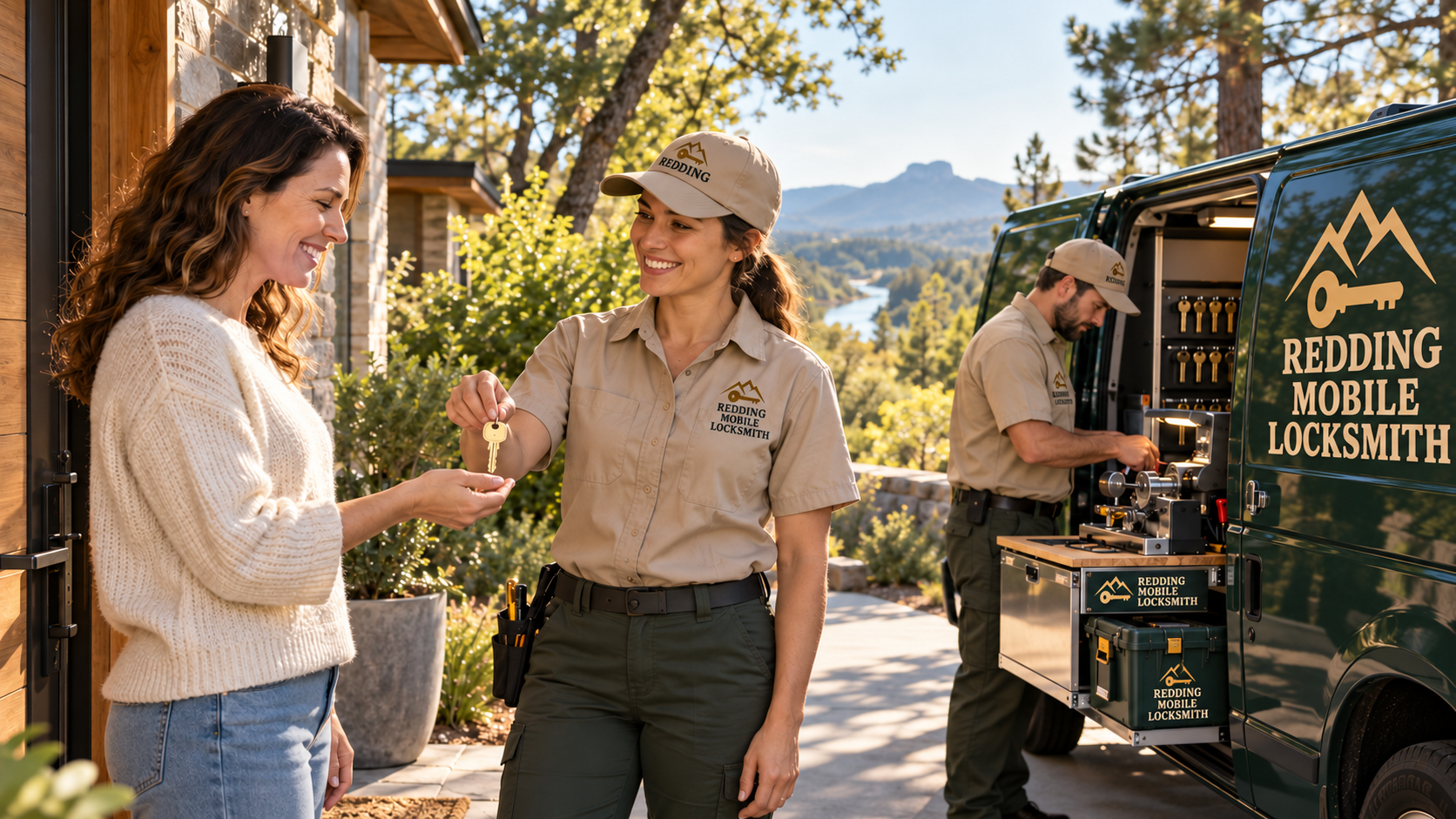
Redding Mobile Locksmith is a 24 hour mobile locksmith serving Fort Jones and nearby communities in Siskiyou County and Shasta County. Our branded service van carries professional tools, key cutting and programming equipment, and common hardware. Use the request form to reach us, since our phone line is coming soon.
Related pages: door hardware for business, business lock service, new lock installation in Fort Jones and the main Fort Jones page.
Good to know
Common questions
How often should I check the hardware on a busy door?
A brief look every few months is sensible, with a fuller check at the change of seasons. Tighten hinge and handle screws, test the latch and closer, and lubricate with a dry product made for locks. Doors that serve guests or customers deserve the most frequent attention.
Why does my door closer work in summer but not in winter?
The oil inside a closer thickens in the cold, so the door moves more slowly and may stop short of the latch. A small turn of the speed valve usually fixes it. Seasonal tuning is normal. If the closer leaks oil or the arm is bent, it may need replacing.
What should I do to a cabin door before leaving for the season?
Cycle each lock a few times, apply a suitable lubricant, make sure doors latch fully and remove any key hidden outside. On return, work stiff locks gently and test every closer and latch before opening for guests. Do not force a frozen lock.
Can a sagging door be fixed without replacing it?
Often yes. Tightening or replacing hinge screws, adding a third hinge or adjusting the strike can bring a door back into line. If the frame or the door itself has warped, more work is needed. Describe the problem and send a photo, and we will tell you what we see.
Is commercial hardware really worth it for a small office door?
For a door used many times a day, yes. Commercial grade parts are built for many more cycles and keep their action longer. For a rarely used door, a strong residential set is usually enough. We help match the hardware to how the door is actually used.
How do I reach you if a business door will not lock?
Use the request form on our contact page and describe the door, the problem and where you are. Our phone line is coming soon. We are a 24 hour mobile locksmith, so mark it urgent if the building cannot be secured.