
Home / Services / Rekey Your Home
Rekeying
Rekey Your Home: When a Change of Keys Beats a Change of Locks
Rekeying makes your old keys useless while the lock on the door stays put. It is the quiet fix people reach for after a move, a breakup, a tenant or a missing key. Here is how it works.
Rekeying
What rekeying actually means
Rekeying sounds like a technical term, but the idea is simple enough to explain over a fence. Inside a typical house lock there is a cylinder, and inside the cylinder sits a row of small pins. Each pin is a different length, and the combination of lengths decides which key will turn the lock. A rekey changes those pins so a different key fits and the old one no longer works.
The hardware on your door stays where it is. The handle, the deadbolt body, the latch and the finish all remain. What changes is the small, hidden part that decides who gets in. Because of that, a rekey is usually tidier and less disruptive than replacing the whole lock, and it leaves your door looking exactly as it did.
People often ask whether a rekeyed lock is as secure as a new one. The honest answer is that it depends on the lock you started with. Rekeying gives you a new key code for the same quality of lock. If the lock is sound, you get fresh keys on solid hardware. If the lock is worn or flimsy, the better move may be replacement, which our page on new lock installation describes.
After you move into a new place
Picture someone getting the keys to a house they have just bought. The seller handed over a ring and said they had given you everything. But think about who else might hold a copy. Previous owners, their relatives, a cleaner, a contractor, the agent, the neighbor who fed the cat. You cannot know, and neither can the seller.
Rekeying right after a move is the sensible and economical way to start with a clean slate. It does not mean anyone did anything wrong. It simply means that the only people with keys are the people you have chosen. The change is done once, and from then on you know exactly who has access.
This applies equally to renters moving into an apartment or house, although your lease will decide what you are allowed to do and who pays. Ask your landlord or property manager what is expected. Our guide on whether you need to rekey after buying a house goes into the reasoning for owners in more detail.
There is a practical bonus too. A new household often wants all the exterior locks to work with one key, because carrying five different keys on a first day in a new home is a nuisance. Keying alike during the same visit solves that, and it gives you a tidy set to hand out. Do it before the moving truck arrives if you can, so the first night in the house is the first night with keys only you control.
After a breakup or a household change
Relationships end, roommates move out, and adult children leave and come back. Each of these events leaves behind a key. Sometimes it is returned politely, and sometimes it stays in a drawer or on someone's ring for months. People rarely think about it until a moment of tension makes them wish they had.
If you share a home and are changing who lives there, rekeying is often the most practical response. It does not need an argument and it does not accuse anyone. It simply resets the key list to match the current household. Do it before the conversation gets difficult, not after. Having the lock changed on a calm afternoon, with a clear plan for who receives the new keys, takes the heat out of a moment that could otherwise turn into a doorstep standoff.
A note on safety: if you feel unsafe because of someone who may still have access, contact the appropriate authorities and people who can help you with the broader situation. A locksmith can change your keys, but a lock is only one part of keeping a household safe. Rules about who may enter a shared home vary, so we do not give legal advice here.
Between tenants
Landlords and property managers rekey constantly, and for good reason. When a tenant moves out, they leave behind keys that might be anywhere. Rekeying between tenants means the next person can be confident that the only keys in circulation belong to people who should have them.
It also protects the landlord. If something goes missing or a door is found open, a clear record of who held keys at the time makes everything calmer and fairer. A turnover rekey, done as a routine step, becomes part of the way a rental is prepared, the same way cleaning and painting are.
From the tenant's side, it is fair to ask what your landlord does between tenants and whether anything about your keys changes during your lease. Our note on how keys should be handled when a tenant moves out explains what usually happens, and you can ask your property manager what their routine is.
- Collect every key you handed out at the start of a tenancy.
- Rekey the exterior locks before the next occupant arrives.
- Keep a simple record of who holds each key and when it was issued.
- Ask whether mailbox, garage and storage locks should be changed too.
When a key goes missing
Losing a key produces a particular kind of low humming worry. You search the car, the coat pockets and the kitchen. Then you start to wonder whether it fell out in a parking lot, a store or a trailhead, and whether anyone who finds it could know which door it opens.
The risk depends on what the key carries. A bare key with no tag is hard for a stranger to connect to a house. A key on a ring with a garage opener, a registration or an address label is another matter. If you cannot say for sure that the key is safe, rekeying turns an unsettled mind into a settled one, because the missing key simply stops working.
Our note on what to do if your wallet with your house keys is gone covers a situation where the key and the address are lost together, which is the case where the answer is nearly always to rekey.
One more thing to consider is timing. A key lost in your own car or your own house is a very different matter from a key lost on a long trip or in a crowd. If you find it again within the hour, wonderful. If it stays missing past the day, take it seriously, and do not let the worry sit for weeks while the door stays vulnerable.
How a rekey visit goes
A rekey is a hands on job, and it usually happens at your door. The locksmith takes the cylinder out of the lock, opens it, replaces the pins with a new set that matches a new key, and puts it back. The new key is cut to fit, tested in the lock, and tried several times to make sure it turns smoothly.
If you have several locks, such as a front door, a back door and a side door, they can be keyed alike so one key opens them all, or kept separate so each has its own key. Keying alike is convenient for a household because it means one ring and no guessing. Keeping them separate helps when you want to give someone access to only one door, such as a garage or a shed.
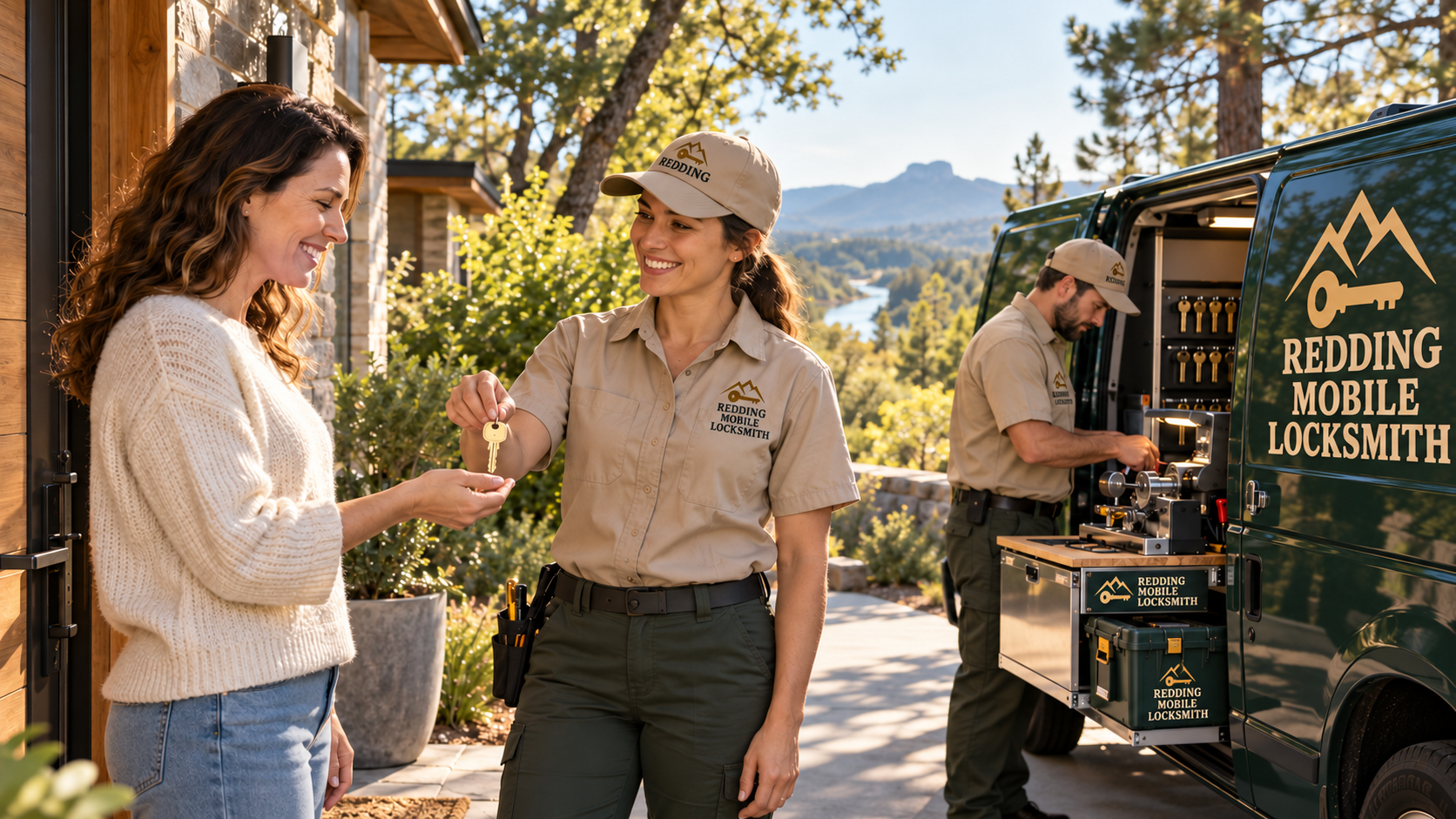
The van carries professional tools, key cutting equipment and common hardware, so the work is done on site in one visit. Expect to be asked to show that you live at the address before anything is changed, just as you would for a lockout. Our locked out of your home page explains what that check involves.
Rekey, replace or repair?
Not every lock should be rekeyed. If the lock is in good condition and you simply want new keys, rekeying is the natural choice. If the lock is damaged, stiff, rusting or hard to turn, new keys will not cure it, and a repair or replacement is wiser.
Replacement also makes sense when you want something the old lock cannot give you, such as a higher security deadbolt, a keypad, or a handle in a different style. Because rekeying leaves the lock body alone, it cannot change how the lock looks or works, only which key opens it.
If you are unsure, our guide on whether it is better to rekey or replace walks through the decision, and our page on lock repair and adjustment covers the case where a lock that still works needs a tune up instead of a change.
Which locks can be rekeyed
Most standard house locks with pin tumbler cylinders can be rekeyed. That includes the great majority of front door knobs, handle sets and deadbolts. A skilled locksmith can handle the common varieties without trouble.
There are exceptions. Some very inexpensive locks are built in a way that makes rekeying impractical, and replacing them is wiser. Some high security locks have restricted key systems, which may limit how and by whom they can be rekeyed. Some smart locks keep a mechanical backup cylinder that can be rekeyed even though the electronic part works differently.
Tell the locksmith what locks you have. A photo of each door, front and back, helps. If you are not sure how many exterior doors you really have, walk around the house and count, including sliding doors, garage entries and any gate or shed lock you want included. Our guide on whether smart locks can be rekeyed covers the electronic side.
Keeping the new key list under control
A rekey is only useful if you manage the keys that come after it. Decide how many copies you need and who gets them. Write it down. A household of four may need four keys and a spare. A home with a house sitter may want a separate key for them that can be collected at the end.
Avoid casual copying. A key copied at a self service machine in a store is easy to make and easy to forget, and it undermines the control you just paid for. If you need extra keys, have them made properly and note who holds each one.
Think about spares too. A spare key placed in a hiding spot outside is a gift to anyone who watches you, so a trusted neighbor or relative is a better home for it. A pin tumbler cylinder is a modest piece of engineering, and rekeying it is a craft more than a chore. The locksmith works with small springs and tiny pins, some no larger than a grain of rice, and each must be placed in the right order. Careful work here is what makes the new key turn smoothly for years. Our short guide on how many keys a household should keep offers a sensible starting point.
Rekeying across our communities
We serve 17 communities across Shasta and Siskiyou counties, and rekeying is one of the most common requests in all of them. In the valley, around Redding, Anderson and Shasta Lake, it tends to follow moves, rentals and sales. In the mountain towns it often follows seasonal homes changing hands, cabins reopening, or a rental turning over for the next season.
Our community pages for Redding and Shasta Lake describe what homes there tend to need, and the page on home lock service in Redding shows how this work fits into the wider range. For a broader look at household locks, see our home lock service page.
When you are ready, send the details through the request form. The phone line is coming soon, so the form is the way to reach us for now. Tell us how many locks, what kind of doors, and whether this follows a move, a lost key or a change in the household.
What to do once the new keys are in your hand
When the visit ends, a few small habits make the change last. Test every key in its lock at the door, from outside and from inside, with the door open and then closed. Make sure the deadbolt throws all the way and retracts smoothly. If anything feels rough, say so while the locksmith is there.
Next, sort the keys. Label spares with a code of your own, such as a color or a letter, rather than the address. Decide where each key lives. A key rack inside a closet is better than a hook beside the front door where a visitor can lift it. Share keys only with people you trust, and ask them to keep them on their person.
Finally, tell the people who should know. Family members need their copies. A house sitter or cleaner may need one. A neighbor holding a spare should know the old key is dead, and ask them to return it. A little communication now means nobody turns up with a useless key and an awkward moment on your porch.
Good to know
Common questions
Does rekeying mean I get a new lock?
No. Rekeying changes the pins inside the existing cylinder so a new key fits and the old one stops working. The handle, the deadbolt body and the finish stay as they are. It is a change to the part that responds to the key, which is why it is often tidier than replacing hardware.
Will my old keys still work afterward?
No, and that is the purpose. Once the pins are changed to match a new key, the old key no longer turns the lock. You can ask for several locks to be keyed alike so one new key opens them all, or keep them separate if you want different access.
Can I rekey if I rent?
Your lease and your landlord decide that. Many leases cover who may change locks and who holds spare keys. Ask your landlord or property manager before any change, and ask whether they plan to rekey between tenants. We cannot give legal advice on lease terms, so check the paperwork you signed.
How many locks can be done in one visit?
Most homes can have every exterior lock handled in a single visit, since the work is done at the door with tools carried in the van. Count your locks ahead of time, including garage entries and side doors, and tell us about any that are old, stiff or damaged.
Is rekeying as secure as installing a new lock?
It gives you new keys on your existing lock, so it is only as secure as that lock is. A sound lock rekeyed is a good result. A worn, loose or low quality lock may be better replaced. A locksmith can look at what you have and tell you honestly which route suits it.
What should I do about a key I no longer need?
After a rekey, the old keys are harmless to your lock, and you can recycle or discard them. Keep them away from the new ones so they cannot be mixed up. If you find an old key that does not belong to you, our guides explain what to do with it.