
Home / Service areas / Sims
Sims, Shasta County
Locks for forest homes and cabins in the Sims canyon
Sims is a small mountain community in the Sacramento River canyon, north of Lakehead, where homes and cabins sit among the trees, neighbors are scattered, and self reliance is just part of the setting.
Sims, Shasta County
A canyon, a river and a lot of trees
The Sacramento River canyon north of Lakehead is a narrow, wooded place, and Sims lies within it. ZIP 96017 covers scattered homes and cabins set into the forest, along the Interstate 5 corridor, with the river and the mountains on either side. It is beautiful country, and it makes plain how much a household depends on itself.
Self reliance has a bearing on locks. When the nearest help is a long way off, you notice every weak link in your own setup. A door that sticks, a key you cannot find, a gate that will not unlatch: each becomes a larger problem when the road is icy or the light is fading. The sound response is to sort out the small matters before they turn into big ones.
This page, in the spirit of a neighbor talking over a fence, goes through what that looks like. It covers forest homes, cabins, vehicles, weather and the long quiet stretches. It ends with six pages written for Sims and with the request form, which is open now because our telephone line is coming soon.
Scattered homes and the question of distance
In Sims, houses are often a good distance apart, and some are out of sight of any neighbor. That has pleasant effects on daily life and plain effects on security. No one on the next lot will notice an unfamiliar vehicle in the drive, so the lock on the door must be the thing that does the noticing.
A sturdy exterior door with a quality deadbolt, a strike plate secured with long screws and a frame in good condition is the foundation. Add a secondary measure on sliding doors and make sure windows latch. These are not expensive changes, and they matter much more where help is far away. See home lock service for what a technician looks at.
Distance also affects how you plan for mishaps. If you lock yourself out, you cannot walk to a neighbor for a spare. Many residents leave a key with a trusted person in the canyon or in a nearby town, and some use a coded lockbox. The right answer is whatever fits your situation, as long as it is thought through in advance. Our guide on lockboxes and showings explains the basics.
Think about the people who may need to reach your house when you are not there. A relative who checks on the place, a delivery driver, a firewood supplier, a repair visit: each is a small question about access. A lockbox with a code you change now and then answers most of them, and it means you are not scattering copies of your house key across the county.
- Give a spare key to someone you trust who lives nearby.
- Check every exterior door for a solid frame and long strike screws.
- Make sure sliding doors have a secondary pin or bar.
- Test window latches before the cold weather arrives.
- Keep a written note of where each spare is kept.
Cabins hidden among the trees
Many buildings in Sims are cabins, some lived in all year and some opened only on weekends. They are wood framed, often older, and surrounded by forest, which means shade, damp and falling debris. A cabin lock deals with more moisture than one in the open valley, and wood doors swell when damp and shrink when dry.
Typical trouble includes locks that stick after a wet winter, latches that no longer meet their strike, and door frames with soft spots. A lock cannot do its job in a rotted frame, so look at the wood as well as the metal. Our guide on why doors sag and what it does to locks explains the relationship.
A cabin that sits empty for long stretches is sensibly locked with hardware that is easy to use but hard to defeat. Many owners fit a keypad for family and a conventional deadbolt for backup. If you manage a cabin for others, the guide on seasonal closing and reopening of a cabin sets out a sensible routine.
One thing forest owners know well is that falling limbs and heavy snow loads can shift a roofline and rack a door frame. If a door that used to close easily now needs a shove, or a gap has opened along one edge, take it seriously. The lock may be fine while the building has moved, and chasing the lock will not fix that. A technician can tell you whether the trouble is hardware or structure.
Damp, shade and the slow work of rust
Forest shade keeps things cool and wet. The sun seldom reaches certain doors, and moisture lingers. Metal parts corrode, wood swells, and locks grow stiff or begin to grind. In a place like this, rust is a constant, quiet enemy.
The simplest defense is regular use and light maintenance. Operate every lock a few times a season, wipe the outside, and use a lubricant suited to lock cylinders. Avoid heavy oil, which gathers dust and pine needles. Consider choosing brass or stainless hardware when you replace a lock, since these tolerate dampness better.
Pine needles and fine debris collect in keyways on exposed gates and outbuildings. A small cover or a different lock position can help. Our guide on what lubricant belongs in a lock and the one on how weather and seasons affect locks give more detail.
Look at where the water goes, too. A door under a roofline that drips onto the threshold will always be wetter than one a meter to the side. Small changes, such as a drip edge, a bit of weatherstripping or a cover over a gate lock, can add years to the hardware. The cost is trivial next to a lock that has to be replaced every few seasons.
Snow, ice and the closed road
Winter in the canyon is a different matter from winter in the valley. Cold is sharper, snow can fall, and ice forms on the road and the porch. A frozen lock is more than a nuisance when the temperature is low and the light is short.
Plan for it. Keep a lock lubricant on hand, keep a spare key where you can reach it without needing to open the door, and think about what you would do if a lock failed in a storm. Do not pour hot water over a frozen lock, because the water refreezes and makes things worse; warm the key gently instead and try again without forcing it.
When conditions are bad, travel to the property may need to wait. We do not promise arrival times, and it would be unfair to anyone if we did, because mountain roads can change overnight. We will tell you what is going on and plan a safe visit when conditions allow. Our page on emergency help at any hour describes how urgent requests are handled.
When the power fails
Outages are a fact of life in forest communities, and they matter to locks. A keypad deadbolt runs on batteries and keeps working when the grid goes down, but an electric strike or a powered gate depends on mains power or a backup. Know which of your doors rely on electricity and what they do when the supply fails.
Some electric locks release when power is lost, and others stay locked. The difference is deliberate and depends on the purpose of the door. For a home, you usually want a door that can always be opened from inside by hand. A properly installed system will do that, and a technician can check it. Our guide on what an electric strike is explains the options.
Keep a mechanical key for any electronic lock, and keep fresh batteries in the house. A low battery warning is a request, not a suggestion. If you have a smart lock, read what a smart lock is and who needs one to understand which features are worth having in the canyon.
It also helps to practice. Everyone in the household should know how to open the door by hand if the electronics fail, and a spare key kept in a sensible place is part of the plan. Try the manual release on a calm afternoon, not in a storm, so that the first time you use it is not the time you most need it to work.
Cars, trucks and mountain driving
Living in Sims means driving, often over mountain roads and along Interstate 5. A vehicle that will not start or open because of a key problem is a serious inconvenience, especially in winter. People here tend to keep trucks and all wheel drive vehicles, some of which have more advanced keys than they realize.
If the key has a chip, a replacement must be both cut and programmed. A mobile technician can do this on site, which saves hauling the vehicle anywhere. Your strongest protection is a spare made while a good key still exists, stored somewhere safe and independent of the vehicle. See cars and trucks and replacement car keys.
Cold weather drains fob batteries, and a dead battery often looks like a dead key. Before assuming the worst, try the metal blade in the door, check the battery and read the owner's manual for the backup start method. Our guide on when a car will not start because of the key goes through the checks.
Gravel and mud get into key rings and fobs as well, and a fob that has been dropped in the snow a few times may lose its seal. If the buttons feel mushy or the case has cracked, replace the shell or the whole fob before it fails completely. A dry spare fob in the house is low cost insurance against a long walk.
Sheds, woodpiles and the practical buildings
Forest properties usually have a few practical buildings: a woodshed, a tool shed, a generator shelter, a storage building for equipment. They rarely get the attention given to the house, but they hold fuel, tools and machines that are valuable and sometimes hazardous.
A decent hasp, a good padlock and a solid door go a long way. Where chainsaws, fuel or a generator are kept, the lock is a safety measure too, since it keeps these out of the wrong hands. Locks on outbuildings live outdoors, so choose ones built for it. Our guide on shed and garage padlock questions gives a good start.
Gates on private drives deserve the same care. A latch that can be opened by a gust of wind is not a lock, and a lock that freezes shut is no help in winter. See gate lock questions for country driveways for suggestions on choosing and maintaining them.
Six pages made for Sims
Each of these pages tackles one need in a Sims setting. Home lock service in Sims is about houses and cabins in the forest, and cars and trucks in Sims covers vehicles for mountain driving.
For chip keys, see key programming and fobs in Sims. Upgrades are covered in new lock installation in Sims, and working buildings in door hardware for business in Sims.
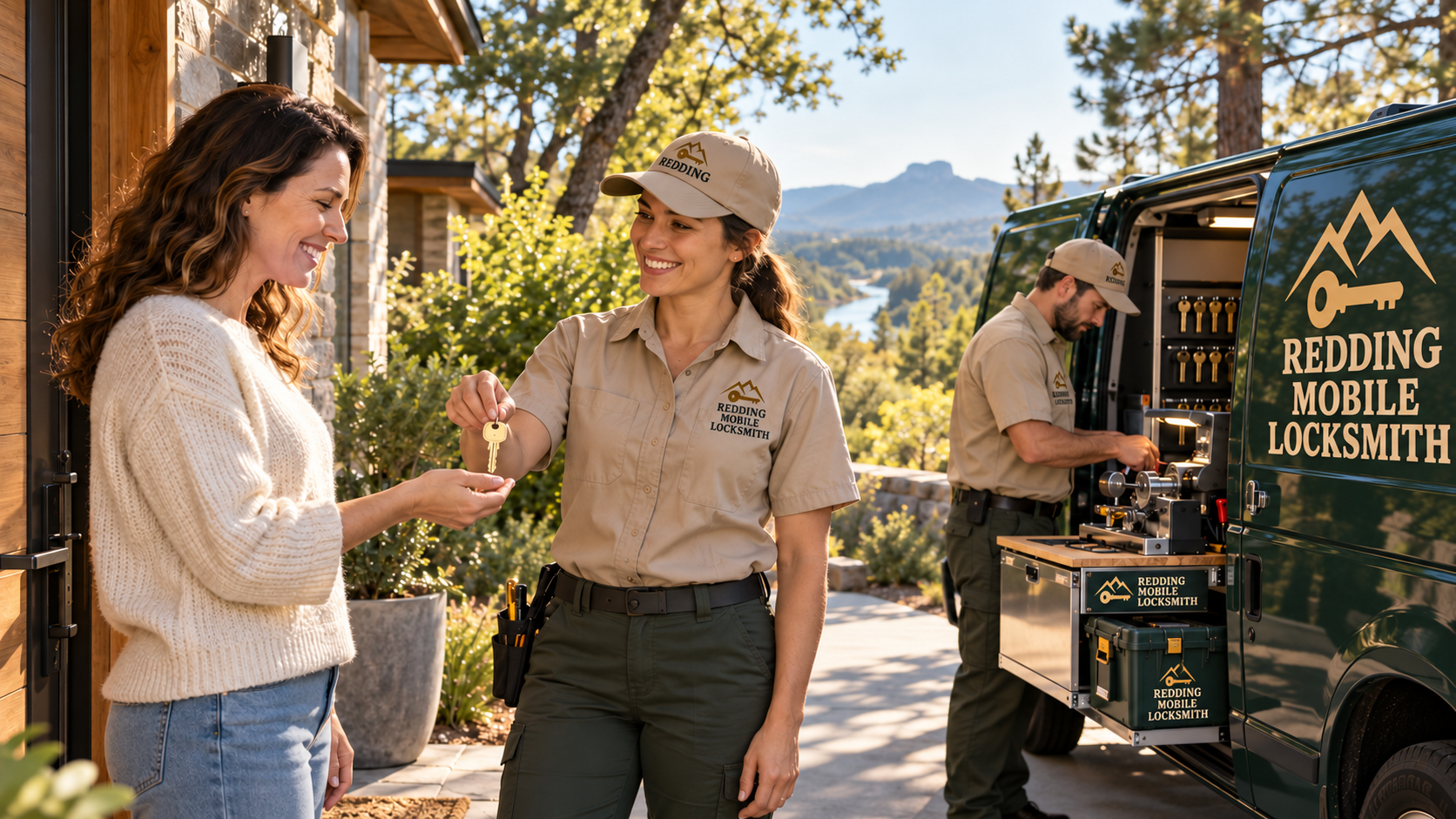
If something cannot wait, emergency help any hour in Sims explains how we handle urgent requests. We are a 24 hour mobile locksmith with uniformed technicians and a branded van carrying tools, key cutting and programming equipment and common hardware, which helps a lot where a second trip is a real burden. Because a job is done on site, you do not have to move a vehicle or a door to a shop, and the work is usually finished in one visit.
If you are locked out in the forest
Safety first. If a child or a pet is locked in a vehicle, call emergency services before anything else. In cold weather, also think about your own warmth. If you are outside the house or the car in low temperatures, find shelter before worrying about the lock.
Once safe, try the sensible things: another door, a window you know is unlatched, a spare key held by someone nearby. Avoid forcing the door, which can damage the frame and make the repair bigger. A professional can often open a lock without harm, but will ask you to show that the home or vehicle is yours.
When you contact us, describe the location carefully, as forest roads and drives can be hard to find. Tell us about snow or mud and whether anyone will meet the van. If the last stretch is steep, narrow or shared with a neighbor, say that as well, and mention any gate we will need to pass and who holds its key or code. The guide on what a lockout is and what to try first is worth reading before it happens.
The communities around Sims
Sims lies north of Lakehead along the Interstate 5 corridor, and further north the canyon leads toward Dunsmuir and Mount Shasta. To the south are Shasta Lake and Redding.
To see all that we do, look through our full list of help, and for answers to ordinary questions, Neighbors Ask gathers our guides.
Good to know
Common questions
Do you come out to Sims?
Yes. Sims, ZIP 96017, is one of the seventeen communities we serve across Shasta and Siskiyou counties. Describe your road, your drive and the weather in the request form, and we will plan around them. We do not promise a fixed arrival time, but we will keep you informed.
What do I do if my cabin door has swelled shut?
Do not force the lock or the handle. Swelling from damp is common in forest cabins and usually passes as the wood dries, but a sticking latch can be adjusted or the edge eased. A technician can find whether the cause is the door, the frame or the lock and recommend a fix.
Will a keypad lock work during a power cut?
A battery powered keypad deadbolt generally keeps working because it does not rely on mains power, but you should check the batteries often and keep a mechanical key as a backup. Electric strikes and powered gates behave differently, so ask a technician how yours responds when power fails.
How do I keep a lock from freezing?
Keep moisture out and use a lubricant made for lock cylinders, not a heavy oil. If a lock does freeze, warm the key gently and avoid pouring hot water over it, since the water can refreeze. Never force a key, because a snapped key is a larger problem than a frozen lock.
Can you make a car key for a truck at my home in the forest?
In many cases, yes. Our van carries key cutting and programming equipment, so a key can often be cut and coded where the truck sits. Give us the general make, approximate year and describe the key you had, so we bring the correct tools.
How can I request help without a phone number?
The call line is coming soon, so use the request form on our contact page for now. Say where you are, what is locked, and whether it cannot wait. Add details about snow, mud or gates, which help us plan a safe visit to a forest property.