
Home / Montague / Key Programming and Fobs in Montague
Montague fob programming
Key Programming and Fobs in Montague, California
Every modern car holds a quiet list of keys it will obey. This page explains how that list works, how a technician adds to it, and how a Montague owner can keep control of who holds what.
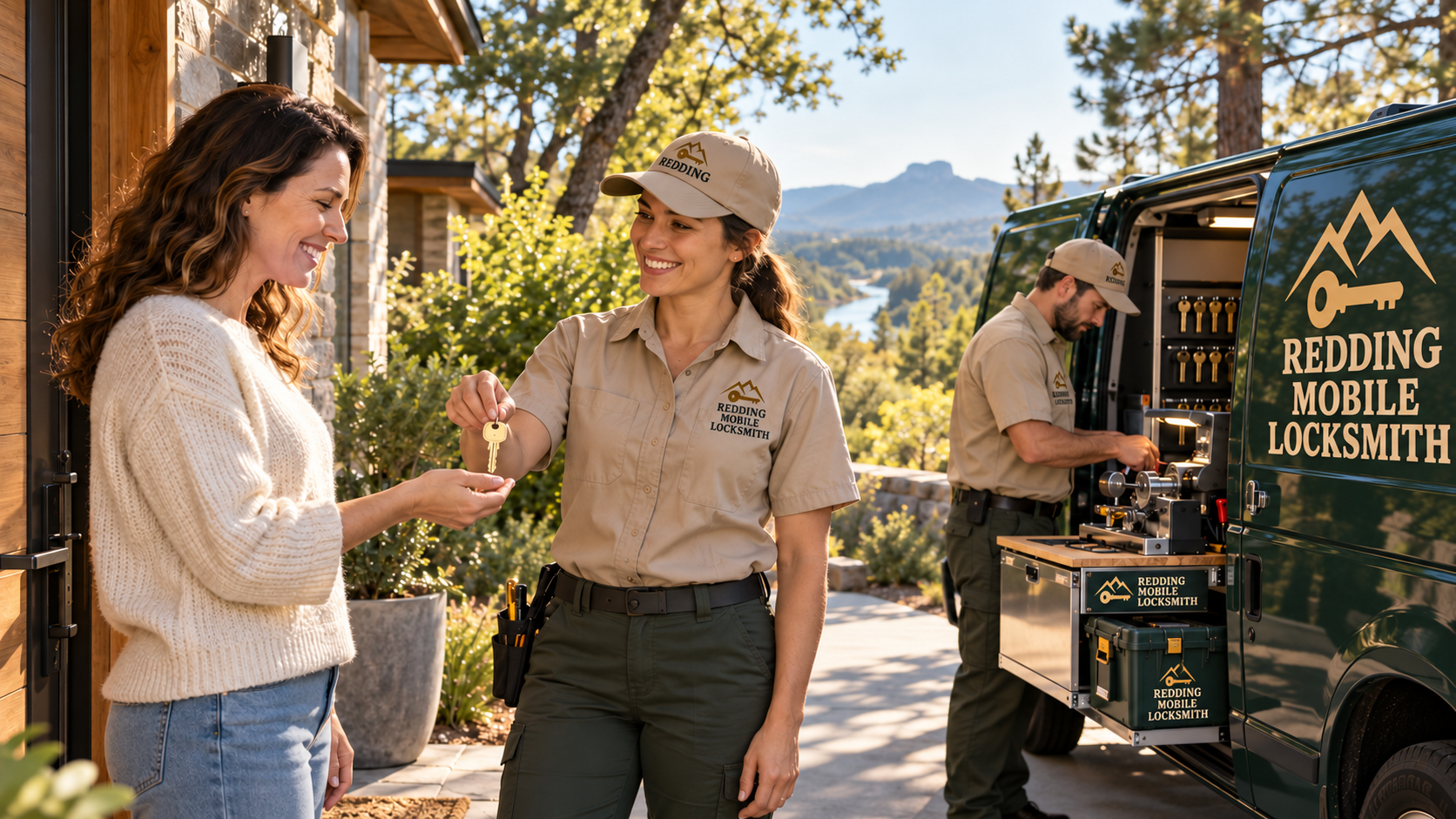
Montague fob programming
The truck that outlasted its keys
Imagine a landlord in Montague who owns a few rental units and keeps one older pickup for maintenance runs. Over the years the truck has been driven by a handyman, a gardener and a nephew, and nobody can say with confidence how many keys exist. When the one working fob finally cracks in half, the landlord faces an annoying question: how does one go about making a new one for a vehicle the whole operation depends on?
The answer begins with understanding that the key is only half of a pair. The vehicle has a computer that holds the identity of every key it will accept. A new key has to be introduced to that computer before the engine will run, and introducing it is what technicians mean by programming.
Once that is clear, the rest becomes straightforward. This page follows the introduction from start to finish, explains the pieces of a fob, and offers some thoughts on controlling keys for a vehicle that several people use. It is written for ordinary owners who would like to know what is happening when a technician plugs a tool into the dashboard.
How the car and the key learn each other
Inside the head of a transponder key sits a small chip. When you insert the key and turn it, an antenna ring around the ignition wakes the chip with a pulse of radio energy and the chip answers with its code. The car's computer checks that code against its list. If it matches, the engine is allowed to start. If not, the engine may crank briefly and then cut out, or refuse to turn over at all.
Programming adds a new code to that list. The technician connects a diagnostic tool to the car's data port, puts the computer into a learning mode and presents the new key. The computer records it. On some vehicles the process is a short sequence of steps, and on others it requires a security exchange before the car will accept anything.
A few older designs let the owner add a key through a sequence of ignition turns, but most modern systems do not. This is intended. A car that anyone could teach with a few turns of a key would not protect much. Our guide on what a transponder chip is takes you through the idea at a gentle pace.
Think of programming as a handshake, repeated each time you start the car. The immobilizer is the part of the vehicle that insists on the handshake, and it is the reason a hot wired engine or a copied blade is not enough. Understanding that one idea explains most of what a technician does when a key refuses to work.
Anatomy of a fob
A fob looks like a single object, though it holds several. There is a circuit board with a small processor, a battery, a set of buttons and a radio transmitter. In many designs there is also a transponder chip that works without the battery, and sometimes a hidden metal blade for emergencies.
The transmitter handles the remote functions: locking and unlocking the doors, releasing the trunk, sounding an alarm or starting the engine from a distance. The chip handles the engine immobilizer. A proximity or smart key combines these into a continuous exchange with the car, so that the vehicle responds when the fob is in the cabin.
Because the parts are independent, they fail independently. A cracked case, a worn button pad or a spent battery can disable the remote while the chip still starts the engine. A broken solder joint can silence the transmitter after a drop. Knowing this means you can describe the symptom accurately, which makes the call to a technician shorter and the first visit more likely to be the only one.
Some owners wonder whether they should replace a plain key with a fob for convenience. Where the vehicle was built for a fob, a replacement is a straightforward programming job. Where it was built for a plain key, adding a fob usually involves aftermarket systems that bring their own complications, so ask a technician before you commit.
Remote head keys, flip keys and smart keys
Three families cover most of what drivers carry. A remote head key has a fixed metal blade and a plastic head with buttons and a chip. A flip key folds the blade into the housing, like a pocketknife. A smart key has no blade you would normally use and relies on proximity, with a push button on the dashboard to start the engine.
Each family has its own programming habits. A remote head key may need the remote functions and the chip taught as separate steps. A flip key often needs its blade cut to the correct pattern in addition. A smart key must be paired so the car recognizes its radio signature, and often several keys can be added in a single session.
Whether a vehicle in Montague has a plain key, a remote head key or a smart key depends on its age and type. Older work trucks often have simple keys, while newer vehicles use fobs. Our page on key programming and fobs covers the main kinds, and the guide on whether all car keys need programming helps you sort yours.
Expect some patience at the paperwork stage. A technician who asks for registration and identification is protecting vehicle owners, you included. If you are a landlord or a business owner acting for a company, bring something that shows the vehicle belongs to the business, and be prepared to say who is authorized to approve the work.
What happens during a programming visit
The visit starts with identification of the vehicle and of you. The technician confirms the make, model and year, checks proof that the vehicle is yours and asks how many keys you have. Then the key is cut if needed, the diagnostic tool is connected and the learning process begins.
Depending on the car, one of three paths follows. If you have a working key, the car may allow a new one to be added after an authorization step. If you have none, the technician may need to read the vehicle's security data or look up a code for your specific car. A few models need a dealer only process, and the technician will tell you so once the details are known.
After programming, test everything. Start the engine more than once. Lock and unlock with every button. Try the trunk release, the panic button and any remote start function. Check each key you own, including the old ones, because it is easier to correct a fault while the technician is still on site. If something is off, say so before the van leaves.
One more cause worth knowing about is a mismatch between a replacement fob and the vehicle. Fobs look alike on the shelf yet differ in frequency and chip type. A fob bought from an unknown source may look right and never pair. Ask the technician to supply or confirm the part, so the pairing succeeds on the first try.
Common reasons a programmed key stops working
Keys sometimes lose their place in the car's memory. A dead vehicle battery can reset certain systems. A dropped fob can crack its solder joints. Water damage can corrode the board. Radio interference near powerful transmitters can confuse a smart key briefly. Sometimes a key fails because the car's list has been changed, perhaps during a previous visit to a shop.
Troubleshoot gently. Try a fresh battery in the fob first, since it is the least costly cure and the most common. Try the spare key to see whether the problem lies with the key or with the vehicle. Check whether the car shows a security light on the dashboard, because a flashing light often indicates that it does not recognize the key.
If those steps do not help, describe what you saw to the dispatcher. Our guide on what to do when a key fob stops working walks through the same checks, and the one on when a car will not start because of the key deals with the engine side.
A written key log can be as plain as a page taped inside a cupboard door. It lists each key, the driver, the date and a signature. When a driver leaves, the key goes back on the board and the log is updated. If a key does not come back, that is the moment to ask a technician about removing it from the vehicle.
Managing keys when several people drive one vehicle
Back to our landlord. A shared vehicle needs a few ground rules, and programming gives him options. He can have the technician program a key for each regular driver, so that no one borrows another person's. He can remove a lost or returned key from the car's list, if the vehicle supports that, so it will no longer start the engine. And he can keep one master spare locked at home.
Some vehicles allow a key to be erased individually from the list, and some require the whole list to be rewritten, after which all the remaining keys must be programmed again. A technician can explain which applies to your vehicle, and that matters if you have ever let a key go to someone you no longer work with.
Writing it down helps. Note who holds each key, the date it was given out, and a plan for getting it back. Our guide on how many keys a household should keep applies the same idea to a house, and the principles carry over neatly to a shared truck.
Gifts and family handovers deserve the same care as sales. A parent passing a truck to a grown child, or a neighbor lending a vehicle for a season, may forget that the keys, the paperwork and the spare all need to travel together. A short written note of what was handed over avoids disagreements later.
Turning over a vehicle: sale, gift or return
Vehicles change hands in Montague as they do everywhere, between neighbors, relatives and buyers from out of town. When a vehicle is sold, the previous owner's keys should not remain a mystery. The simplest approach is to hand over every key and fob, or to ask a technician to remove any key you keep from the car's list.
For the buyer, the first job is the reverse. Count the keys, test each one and consider whether a spare should be made. If the seller could only produce one key, programming a second while the first still works is the cleanest course. Our guide on buying a used car and the extra key question explains why.
A landlord handing back a unit and a vehicle at the same moment, perhaps a tenant who leased a parking space or a company car, will want to collect every key. Our page on replacement car keys describes what to do if one is missing.
Cold mornings add a wrinkle. Batteries lose strength in low temperatures, so a fob that worked all autumn may seem to die in the first hard frost. Keeping the fob in an inside pocket until you reach the vehicle can help, and it is worth carrying a spare battery during the winter months.
Local conditions in a farming town
Montague is a small town in the Shasta Valley of Siskiyou County, with older homes, agricultural surroundings and small main street businesses. Vehicles here do real work: pickups on gravel, vans on delivery rounds, tractors and farm vehicles that sit idle for weeks. Dust, mud and heat are tough on fobs, which hide in pockets and on dashboards.
Practical habits protect them. Keep a fob in a case or a pocket of its own, away from tools and hard objects. Do not leave a fob on a dashboard in hot sun, because heat shortens battery life and can damage the case. Replace the battery on a schedule and not only when it fails.
If you work with older equipment that uses plain cut keys, remember that they need no programming at all, and can be duplicated by a locksmith or a key shop. For the rest, the technician with the right tool is the answer. Our page on cars and trucks in Montague shows the full range of vehicle work handled locally.
If a vehicle will not start at all and you are stuck in a place that feels unsafe, say so. Safety comes before the key. A dispatcher can talk you through waiting somewhere secure, and the technician can meet you when you are ready. Emergency services are the right call for any danger to people.
Asking for help
When you are ready to arrange a visit, gather the vehicle make, model and year, the number of working keys you have now, and your identification and proof of ownership. Say whether the problem is the remote buttons, the engine start or both. Redding Mobile Locksmith is a 24 hour mobile service whose van carries key cutting and programming equipment, so many jobs can be finished on site.
Start with the request form on the contact page. For a different angle on the same service, see key programming and fobs in Granada, and the Montague overview lists every local page for the town.
- Check the fob battery before you call.
- Have every existing key with you, including damaged ones.
- Know whether the vehicle starts with a key turn or a push button.
- Tell the dispatcher about any aftermarket alarm or remote start.
- Decide in advance how many spare keys you want.
Good to know
Common questions
How does a car know which keys to accept?
The car's computer stores a list of key codes. When you turn the key, the chip inside it replies with its code and the computer checks the list. A match lets the engine run. Programming adds a new code to that list, which is why an unprogrammed copy fails to start the car.
Can a technician remove a lost key from my car's memory?
On many vehicles, yes. Some allow individual keys to be erased, while others require the list to be rewritten with only the keys you still have. The technician can tell you which applies once the make, model and year are known. It is a sensible step if a key may have fallen into the wrong hands.
Is it better to replace the fob battery or the whole fob?
Try the battery first. It is the most common cause of a weak or dead fob and is simple to change. If the buttons still fail, the case is cracked or the board is damaged, a replacement fob can be programmed. A technician can test the old fob and tell you which route makes sense.
Will programming a spare cost me my original key?
No. Adding a key to the list does not take away existing keys, and all of them continue to work. The technician will test each key before leaving. If you want a particular key removed, say so and ask whether your vehicle supports it before work begins.
Do tractors and farm vehicles need programmed keys?
Many older farm vehicles use plain cut keys that need no programming, while newer machines may use chips or fobs. Check the key head for a plastic cover or buttons, which suggest electronics. If you are unsure, describe the machine to the dispatcher, who can tell you what a technician can handle.
Can I program a fob myself using instructions I find online?
Some older vehicles allow it, and the owner's manual may describe a method. Most modern vehicles need a diagnostic tool and security access. A failed attempt can sometimes lock the system, which turns a small job into a larger one. If your manual describes a procedure, follow it carefully, otherwise call a technician.