
Home / Neighbors ask / How do I judge how long a lock will last?
Lock lifespan, explained
How do I judge how long a lock will last?
No lock comes with a countdown clock, but it does leave clues. Use, weather, materials and care all shape the answer, and a few simple checks will tell you whether yours has years left or is on borrowed time.
Lock lifespan, explained
There is no single number, and that is fine
People like a tidy answer, such as a lock lasts so many years, but locks do not work that way. A deadbolt on a quiet back door might outlast the person who installed it, while the same model on a busy front door in a salty, dusty or freezing place can tire much sooner. The honest answer is that a lock lasts as long as its parts keep working together.
What you can do is read the signs. Locks wear in predictable ways, and each way gives a hint before the final failure. A lock that has started to complain is telling you something, and a little attention at that stage often saves a lockout later.
In this guide we will look at what wears, what speeds up wear, how to run a simple home check and when it makes sense to repair, rekey or replace. Think of it as a conversation over the fence about a small piece of hardware that works harder than most.
Think of a lock the way you would think of a good pair of boots. Nobody can say how many miles they have left, but you can feel the sole, check the stitching and notice whether they still hold your foot. The same kind of hands on attention works with hardware, and you do not need a trade background to do it.
What actually wears out inside a lock
A typical pin tumbler lock has a cylinder with small spring loaded pins. Each time you insert a key, the pins ride over the cuts and rise to a line that lets the cylinder turn. Do that thousands of times and the pins, the springs and the key itself all wear a little. Brass is soft, which is one reason it works so well and one reason it ages.
The bolt and latch are the next part to tire. A deadbolt slides into a strike plate in the frame, and a latch springs in and out of the same area. Springs weaken, the latch edge rounds off and the throw, meaning how far the bolt extends, can drift as the door shifts. A bolt that barely reaches its hole is a lock in trouble.
Finally there are the outer parts: the handle, the lever, the thumb turn and the screws. They take the daily abuse of hands, bags and slamming doors. Loose screws and wobbly handles are small problems that turn into big ones when left alone, since the stress shifts to parts that were never meant to carry it.
Springs deserve a special mention because they do much of the unseen work. Inside the latch, a spring pushes the bolt out. Inside the cylinder, tiny springs push the pins down. Metal springs lose some strength over time, especially with heat cycles, and when they weaken, the lock may stick at certain angles or fail to reset after you turn the key. A professional can swap these parts or the whole cylinder.
Signs that a lock is getting tired
The earliest signs are subtle. The key may feel gritty going in, or you may have to wiggle it a little before it turns. The bolt might stick for a half second before it slides. Or you may notice that the lock only works well if you lift the door slightly while turning. These are quiet complaints, and they are worth listening to.
Later signs are harder to miss. A key that refuses to come out, a bolt that does not fully extend, a handle that droops, or a lock that sometimes works and sometimes does not all point to wear or misalignment. If you ever have to force a key, stop and check, because forcing can snap the key in the cylinder.
Our guide on how to tell if your locks are worn out goes further into these signals, and our page on why a lock turns so hard covers the most common culprit of all.
Weather often reveals problems first. A lock that works well in mild weather but fails on a cold morning or a scorching afternoon is telling you that its tolerances are tight or its lubricant has given up. Keep a mental note of when the trouble shows up, since that pattern helps a technician identify the cause.
- The key needs jiggling, lifting or extra force to turn.
- The bolt hesitates, drags or stops short of its full throw.
- The handle or lever feels loose, droops or does not spring back.
- The lock works on some days and not others, often with weather.
- The key is worn smooth and no longer grips the pins well.
What shortens a lock's life
Use is the biggest factor. A door that opens and closes forty times a day will wear its lock sooner than one used twice a day. A shop entrance, a family home with teenagers and a rental unit with frequent turnover all run their locks harder than an infrequent side door. That is not a flaw, just arithmetic.
Weather and environment come next. In the valley around Redding, hot dry summers bake plastic and dry out any lubricant, and dust slips into every gap. Up in the mountain towns, snow, ice and temperature swings can stiffen springs and freeze moisture inside cylinders. Our guide on weather and seasons and locks digs into this.
Then there is the door itself. A sagging door puts side load on the bolt every time you close it, grinding it against the strike. Our article on why doors sag and what it does to locks explains why a lock can fail not because it is weak, but because it is fighting its frame.
Quality and grade give you a head start
Locks are not all built equally. Some use thin stamped parts and soft metals, while others use thicker steel, longer screws and tighter tolerances. The difference is hard to see from the shelf but easy to feel after a few years of use. A heavier lock tends to shrug off wear that would make a lighter one sloppy.
There is an industry grading system for residential and commercial locks that measures durability and strength. We go through the idea in our guide on what lock grade means. A higher grade usually means more cycles of testing and more resistance to force, though the label alone does not tell the whole story.
Price tells part of the tale too, but not all of it. Our article on whether expensive locks make a difference takes a fair look at what you really get for more money, and where extra cost buys little.
Another factor is the finish. A brushed or coated outer surface protects the metal beneath from moisture and wear. When the finish flakes, rust can creep into screws and moving parts, and the lock ages sooner. Sun can also fade and crack thin coatings on south facing doors, so look at the face of the lock as well as the way it turns.
A ten minute check you can do yourself
You do not need tools to check the state of a lock. Start by opening the door and working the bolt with the door open. It should slide in and out smoothly with no grinding. Then close the door and lock it with the key from outside and with the thumb turn from inside. Notice any resistance or odd noises.
Next, look at the strike plate. The bolt should line up with its hole in the frame without scraping, and the plate should be tight with no wobble. Check the screws on the lock itself for looseness. A small amount of tightening with a hand screwdriver often cures a wobble, as long as you do not overdo it.
Finally, test your keys. Try each one, especially the spare that rarely gets used. A worn key can feel fine in one lock and fail in another. If the lock takes some keys but struggles with others, the problem may be the key and not the lock, and a fresh copy cut from the original blank can fix it.
If you have a spare door that you rarely use, try the same checks there. Often the unused lock is perfectly smooth, and comparing it with your daily lock shows you just how much the daily one has changed. That comparison can be more telling than any number printed on a box.
Repair, rekey or replace
Once you know what is going on, the choice is practical. If a lock is basically sound but sticky or loose, repair and adjustment may bring it back. Our page on lock repair and adjustment describes what a technician does, from realigning a bolt to replacing a worn cylinder.
If the lock works well but you are worried about who has keys, rekeying is the right tool. It changes the inside so old keys stop working. See rekey your home for how that goes. If the lock is worn out, outdated or simply not strong enough, replacement is the cleaner answer, covered at new lock installation.
For a side by side view of two of those options, our guide on whether to rekey or replace helps you decide. Often the answer is a mix: repair one door, replace another and rekey the whole set so one key fits everything.
Do not ignore the cost of waiting. A lock that fails on a cold night, or at a time when you cannot get help, costs more in trouble than a planned visit would have. Spending a little to fix a tiring lock now is usually kinder to your schedule and your nerves than waiting for the day it quits.
Lubrication and light care
A little care stretches the life of a lock. Keep screws snug, keep the strike plate tight and keep the keyway clear of dust and debris. Wipe the key now and then, since a dirty key drags grime into the cylinder. A brief look each season, say at the turn of the weather, is enough to catch most problems.
Lubrication is the part people most often get wrong. Oils attract dust and gum up, and some household sprays do more harm than good in a pin tumbler cylinder. Our guide on what lubricant belongs in a lock explains what to use and what to leave in the garage.
If a key sticks or will not come out, do not force it. Our guide on how to deal with a stuck key walks through safe steps. A gentle approach early on keeps a small annoyance from becoming a broken key and a service call.
Keep a small note, even on your phone, of when you last checked and cared for each lock. Most people never do, and then cannot say whether a problem is new or old. A date beside each door turns vague worry into a useful record, and it makes any later conversation with a technician much more productive.
Different doors, different expectations
A front door with a deadbolt and a lever set will live a different life from a garage entry door, a shed padlock or a sliding glass door latch. Padlocks outdoors take rain and frost. Garage entry doors rattle as the big door shakes the wall. Sliding doors get dirt in their tracks. Each has its own wear pattern.
Business doors face different demands again. A shop door opened by many hands needs hardware built for repeated use, which is why commercial hardware is often heavier. Our page on door hardware for business describes the types and what they are made to handle.
Whatever the door, ask yourself how often it is used, how much weather it sees and how important the doorway is. A rarely used cabinet lock can be left to age. The lock on the door your family uses every night deserves more attention and a more generous replacement schedule.
Imagine a household in Anderson with a front door used by five people and a back door used by one. After several years, the front door lock would almost certainly show more wear, even though both are the same model. Treating the two doors differently, with more frequent checks on the busier one, makes good sense.
Getting a professional opinion
Sometimes it is easier to have someone look. A mobile locksmith can assess a lock on site, work the bolt, check the alignment and tell you plainly whether the lock has years left. The visit is usually the moment to ask about upgrades, spare keys and anything else you have wondered about.
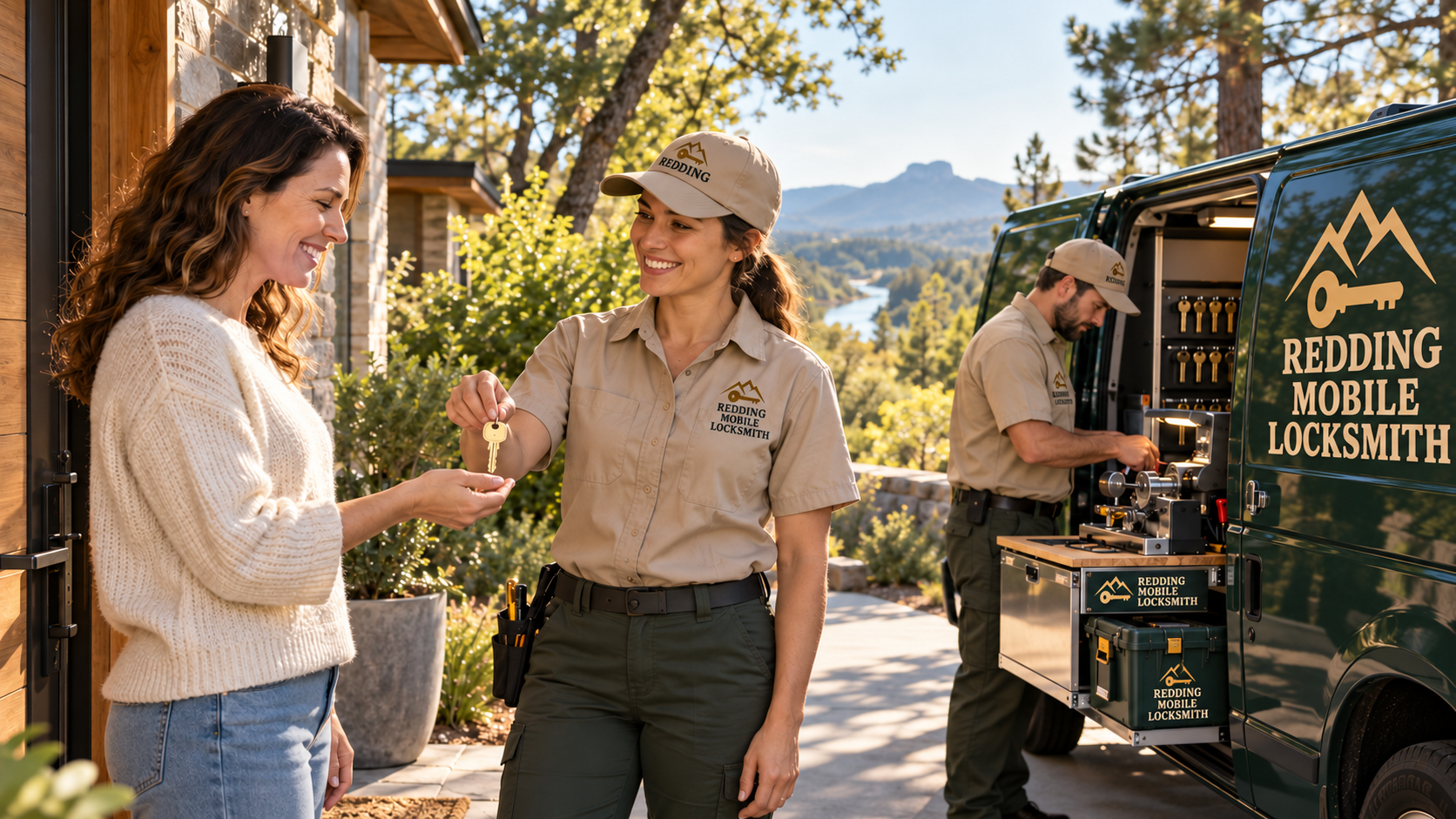
We bring a branded van with tools, key cutting equipment and common hardware, so many fixes can be done on the spot. If you would like us to take a look, send details through the request form and tell us which doors concern you. We serve towns from Redding to Weed.
Before the visit, jot down when the lock first acted up, what the weather was like and whether anything changed on the door. Those small details help a technician narrow the cause and give you a straight answer on whether to repair or replace.
Good to know
Common questions
How many years should a household lock last?
There is no fixed number. A lightly used lock on a sheltered door can last a very long time, while a busy door in harsh weather may tire sooner. Judge by condition rather than age: smooth operation, a full bolt throw and snug screws are good signs, while sticking and looseness are warnings.
Is a sticky lock always a sign that it needs replacing?
No. Many sticky locks are caused by dirt, a misaligned strike plate, a sagging door or a worn key. A technician can often fix the cause with cleaning, adjustment or a fresh key. Replacement makes sense if the cylinder or the bolt itself is badly worn.
Can I make a lock last longer?
Yes, with small habits. Keep screws snug, keep the keyway clean, use a proper lock lubricant sparingly and fix a sagging door before it grinds the bolt. Avoid forcing keys. A short check at each change of season catches most problems before they grow.
Do outdoor locks wear out sooner?
Usually. Rain, frost, dust and sun all affect outdoor hardware, and padlocks and gate locks get the worst of it. In the valley, heat and dust cause trouble, while mountain towns deal with snow and ice. Choose weather ready hardware and give it a seasonal look.
Should I replace all my locks at once?
Not necessarily. Replace the ones that show real wear or that guard important doors, and rekey the rest so one key works everywhere. Spreading the work across a season can ease the cost and let you learn which doors need the most attention.
How can I get a locksmith to look at my locks?
Send a request through the form on the contact page, naming your town and the doors in question. The phone line is coming soon. A mobile technician can assess the hardware on site and explain whether repair, rekeying or replacement makes the most sense.