
Home / Lakehead / Key Programming and Fobs in Lakehead
Lakehead fobs and keys
Key Programming and Fobs in Lakehead: Testing Every Function
A new key that starts the engine has done only part of its job. This page covers what to test before and after a replacement in Lakehead, so nothing surprises you a week later.
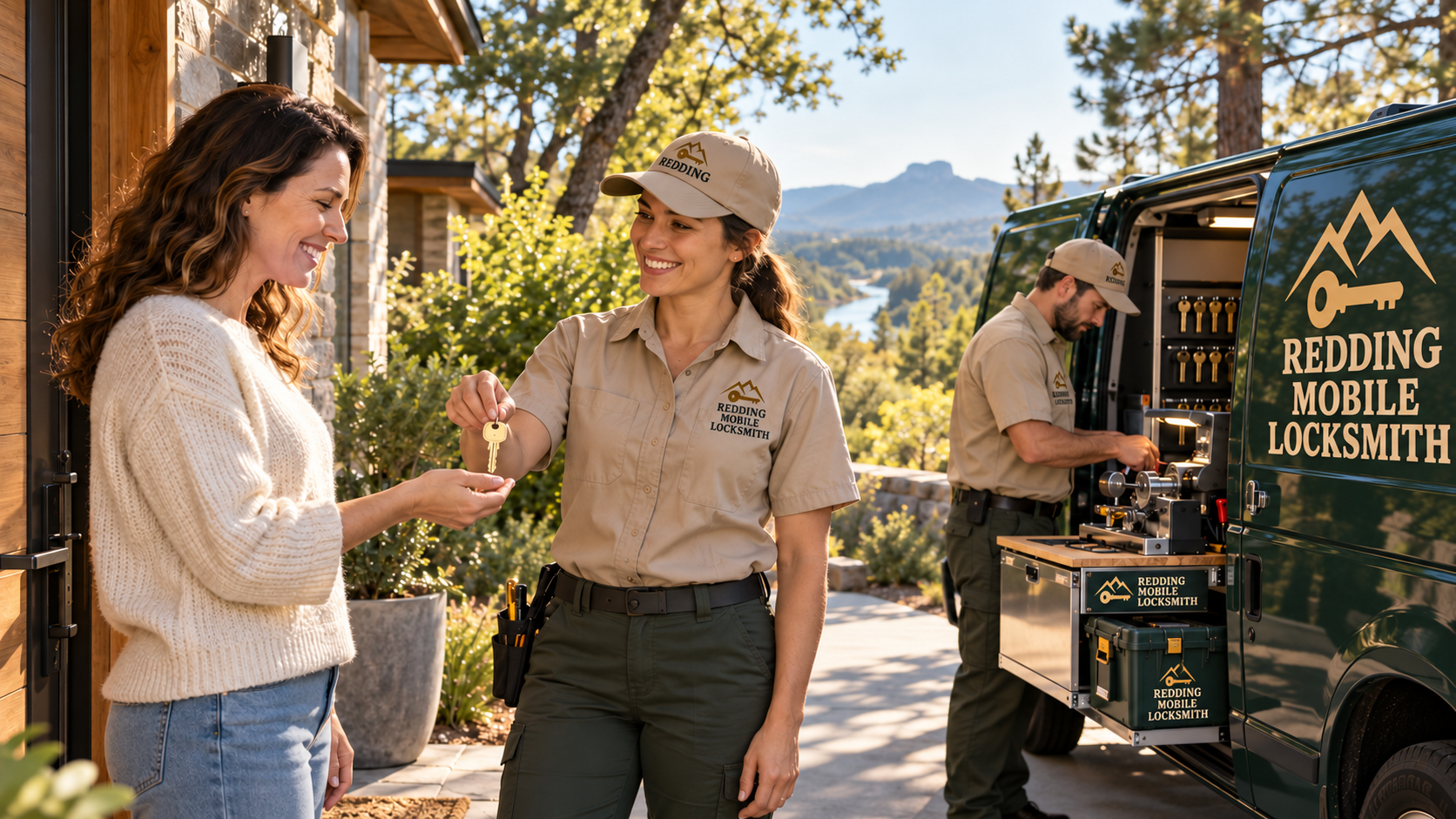
Lakehead fobs and keys
A neighbor helps a neighbor, and then the trunk will not open
Imagine a neighbor in Lakehead who helps another neighbor get a replacement fob after the original went missing at the marina. A new fob is cut and programmed, the engine starts, and everyone shakes hands. A week later, the trunk button does nothing, and the panic button chirps at odd moments. The key was programmed for the main job and nobody checked the rest.
That small story is the reason for this page. A modern key does many things: starts the engine, locks and unlocks the doors, opens the trunk or tailgate, sounds an alarm, sometimes starts the engine remotely or lowers the windows. Each function is a separate feature that the car has to learn. A proper job tests all of them, on the spot, before the technician leaves.
If you would like the full explanation of the service, our key programming and fobs page covers it from the beginning. What follows is the Lakehead companion, with a focus on the habit that prevents second visits: testing before and after.
Test before the work: know what already works
It sounds backward, but testing starts before anything new is made. If you still have an original key or fob, put it through its paces first. Does it start the engine reliably? Do all the buttons respond? Does the car recognize it from a short distance, if it is a smart fob? Write down what works and what does not, since that tells the technician what the new key should do.
This matters because a new key can only be as capable as the vehicle and the key type allow. If the old fob never worked the trunk, the cause may be the car, not the key, and replacing the fob will not fix it. If the old key failed to start the car intermittently, the problem might be the ignition or the immobilizer, and a new key may or may not help.
Take a minute to look at the key too. Cracks in the case, worn buttons, a loose blade or a bent shaft are worth noting. A technician can match the new key to the right type, and may suggest a better case or replacement while the work is underway. See our page on replacement car keys for the options.
If you have no working key at all, the before test becomes a before inventory instead. Gather anything that belonged to the key set: a spare in a drawer, a valet key, a loose case, even the paperwork that came with the vehicle. Those scraps often tell a technician which key type the car was built for, and they can save a round of guessing about chip type and frequency.
The functions worth checking, one at a time
Go through the list slowly, with the technician beside you. Take your time with this step, because it is far easier to fix a missed function in the driveway than on the road. Test each function twice, once with the door closed and once from a short distance, since range can differ.
On a vehicle with a push button start, check that the car detects the fob in several places: the pocket, the cup holder, the back seat. Many cars have a limited zone inside the cabin, and a fob that works in one spot may not work in another. That is normal, but you should know the pattern.
If any function fails, say so right away. The technician can often fix it on the spot by reprogramming the remote part or checking the settings. If a feature simply is not supported by the key type you chose, it is better to learn that now and decide whether to change the key.
Do not forget the small, rarely used buttons. A panic button gets pressed by accident far more often than on purpose, so it is wise to know exactly how loud it is and how to silence it. Some fobs have a second unlock press that opens every door while the first opens only the driver's door; learn which one your car uses so the fob behaves the way you expect when your arms are full of gear from the dock.
- Start the engine with the key in the ignition, or with the fob on a push button vehicle.
- Lock and unlock all doors, and listen for the click on each.
- Open the trunk or tailgate from the fob, and from the cabin if it has a release.
- Use the panic button once, briefly, to confirm it works and can be silenced.
- Try remote start or any other extra feature the vehicle offers, if you use it.
Why separate functions need separate programming
It surprises many people that one key can contain two or three independent systems. The transponder chip tells the engine it may start. The remote transmitter sends lock and unlock commands to a receiver in the car. A smart fob may add a proximity system that works at a short distance. Each is its own radio conversation with a different part of the vehicle.
Because they are separate, they can fail separately. A key can start the engine yet not lock the doors, and a fob can lock the doors but not start the engine. The programming equipment usually handles both, but a technician checks them separately. A short test of each prevents the sort of half working result in our neighbor story.
The vehicle also decides how many keys it can hold. Some cars accept a limited number of remotes, and adding one beyond the limit may mean removing another. That is a good reason to count the keys you want to keep before the work begins. Our guide on whether all car keys need programming explains which vehicles need which kind of attention.
Lake roads, marinas and the lost key problem
Lakehead sits at the north end of Lake Shasta, near Interstate 5, with marinas, vacation homes and cabins around the water. Keys get lost in places that make recovery hard: dropped off a dock, left on a boat seat, slipped through a gap in a pier. Water is the usual enemy, and a key that falls in is usually gone.
When that happens, the question is not only how to get a new key but what to do about the missing one. If the old key sinks, it is lost for good and poses little risk. If it was dropped in a parking lot or left at a rental, someone may find it. Ask the technician whether your vehicle can be set to ignore the missing key. Some can, and that is the safest way to close the gap.
Visitors face a version of the same problem. A person who drives up for a weekend and loses the only key is a long way from home, and the vehicle may be needed to get back. If that is you, have the vehicle details ready and tell the technician about any deadline. We do not promise times, but we can plan around what matters. You can start with the request form while the phone line is coming soon.
Testing after the work: the part people skip
Once the new key is made and programmed, the testing begins again. Start the engine, let it idle, then shut it off and restart it. Do this several times. A key that starts once and fails the next time is a key that has not been learned properly.
Next, drive a short distance if possible, or at least run the engine long enough for the car to settle. Some systems check the key again after the engine starts, and a fault can show up only then. Watch the dash for security lights. A light that stays on after starting is a warning that something is off.
Then test the remote functions again, from the start, as you did before. Walk away from the vehicle and use the fob at a normal distance. Test the doors from the outside and the inside. If there is a trunk release, test that too. Finish with the old key, if you are keeping it, to confirm it still works or that it has been disabled, as you intended. Our guide on what to do when a key fob stops working is worth a read if something drifts later.
Count your keys, and decide which ones stay
After the work, you should know how many keys the car now accepts. A tidy approach is to write it down: two fobs, one valet key, one spare. If a key was lost, confirm that it is no longer accepted. If the car does not support that, take that into account in how you think about risk.
Think about which keys should be which. A valet key, which starts the car but does not open every compartment, is good for a parking attendant or a mechanic. A full fob suits the main driver. A spare belongs somewhere safe and separate, not in the vehicle. Our guide on how many keys a household should keep offers the thinking.
If the vehicle is shared, keep a short note of who holds each key. This sounds fussy until the day a key is missing and nobody remembers who had it last. A simple list in a drawer solves the problem.
Seasonal use changes the picture. A vehicle that sits at a vacation home for weeks between trips may have a weak battery on arrival, and that can look like a key fault even when the key is perfect. Before you blame the new fob, check that the vehicle battery is healthy, and consider keeping a charger or a maintainer on hand if the vehicle is parked for long stretches in the cold of winter or the heat of summer.
When the new fob works but acts oddly
Occasionally a fob works but behaves strangely: a short range, a delay, buttons that need a firm press, or a function that works only sometimes. Several causes are possible. The battery may be new but the wrong type. The fob may be a lower quality unit that does not transmit as strongly. Interference from other devices can also play a role.
Start with the simple checks. Swap in a fresh battery, press the button close to the vehicle, and see if the behavior changes. Try the other fob if you have one. If one fob is weak and the other strong, the weak one is the issue. If both are weak, the vehicle's receiver might need attention.
If the odd behavior persists, let the technician know. A good one will want to know and will not treat it as a nuisance. Many such problems can be solved by reprogramming or replacing a part, and a second look is part of doing the work properly. Keep notes on what you saw, such as how far away the fob stopped responding, so the technician has something specific to work from. Our guide on remote start and key questions covers some of the extras that can cause confusion.
Paperwork, proof and permission
A technician will ask you to show that the vehicle is yours, or that you have permission to have keys made for it. That is not suspicion; it is the way the work is done responsibly. Registration, identification that matches, or a letter from the owner are common ways to show it. Rules and expectations vary, so ask what is needed when you request the visit.
Vacation homes and shared vehicles can complicate this. If the vehicle belongs to a family member, a friend or a business, get permission in writing or have the owner available. If the vehicle is leased or financed, check the terms, because some owners expect to be told.
Having your paperwork ready is the easiest favor you can do yourself. It turns a visit that might stall into one that proceeds smoothly. Our guide on what to have ready when you call a locksmith has a short list.
After the visit: habits that keep keys working
Good habits extend the life of a key. Replace the fob battery before it dies, perhaps once a year. Keep the key ring light, since weight wears the ignition. Avoid water, heat and hard knocks. Keep the spare in a safe place and test it every few months, so you find out about a problem while there is time.
If the key is for a work vehicle or shared car, label the keys privately and keep a note of who holds them. If the vehicle changes hands, have the keys reviewed. And if you ever feel unsure about a key, ask. A short check costs less than a lockout or a no start in the middle of a trip.
For other places in the county, key programming in Millville looks at a foothill setting from a different angle, and the Lakehead page gathers all the local services together. A neighbor's tip is a fine starting point, and a technician's test is how you confirm it.
Good to know
Common questions
Why should I test every button after a new fob is programmed?
Because the engine start and the remote buttons are separate systems, and one can work while another does not. Testing everything on the spot lets the technician fix a missed function before leaving. Finding a dead trunk button a week later usually means a second visit and a delay.
Can a fob be programmed to work with only some functions?
It depends on the key type and the vehicle. Some key types support every feature your car offers, while simpler ones may omit things like remote start or trunk release. Tell the technician which features you use, so the right fob is chosen. Asking before the work is easier than adding features afterward.
What if my old key stops working after I get a new one?
Some vehicles remove old keys from the list when a new one is added, and some keep them. Ask before the work starts which your car does and what you want. If you plan to keep the old key, tell the technician so the process can be handled to preserve it.
My fob works near the car but not from a distance. What is wrong?
Often the battery is weak or the wrong type, and a fresh one fixes it. A weaker transmitter or a damaged antenna in the fob can also shorten range. If a new battery does not help, the technician can test the fob and the car's receiver to see which side is at fault.
How many fobs can a car accept?
It varies by vehicle. Some cars take a limited number of remotes, and adding one beyond the limit may require removing another. Decide how many keys you want to keep before the work begins, and let the technician know, so the final set is complete and nothing is dropped by surprise.
What should I do if I lose a key in the lake?
If it sank, it is probably gone and unlikely to be found. Make a replacement and ask whether your vehicle can be set to ignore the missing key, which closes any remaining risk. If the key may have been found by someone else, that step matters more. Keep your spare dry and safe.