
Home / Mount Shasta / Door Hardware for Business in Mount Shasta
Business doors
Door Hardware for Business in Mount Shasta, Door by Door
Every door in a working building has a job, and the hardware should match it. This page explains how to match locks, closers, push bars and strikes to the doors on a Mount Shasta property.
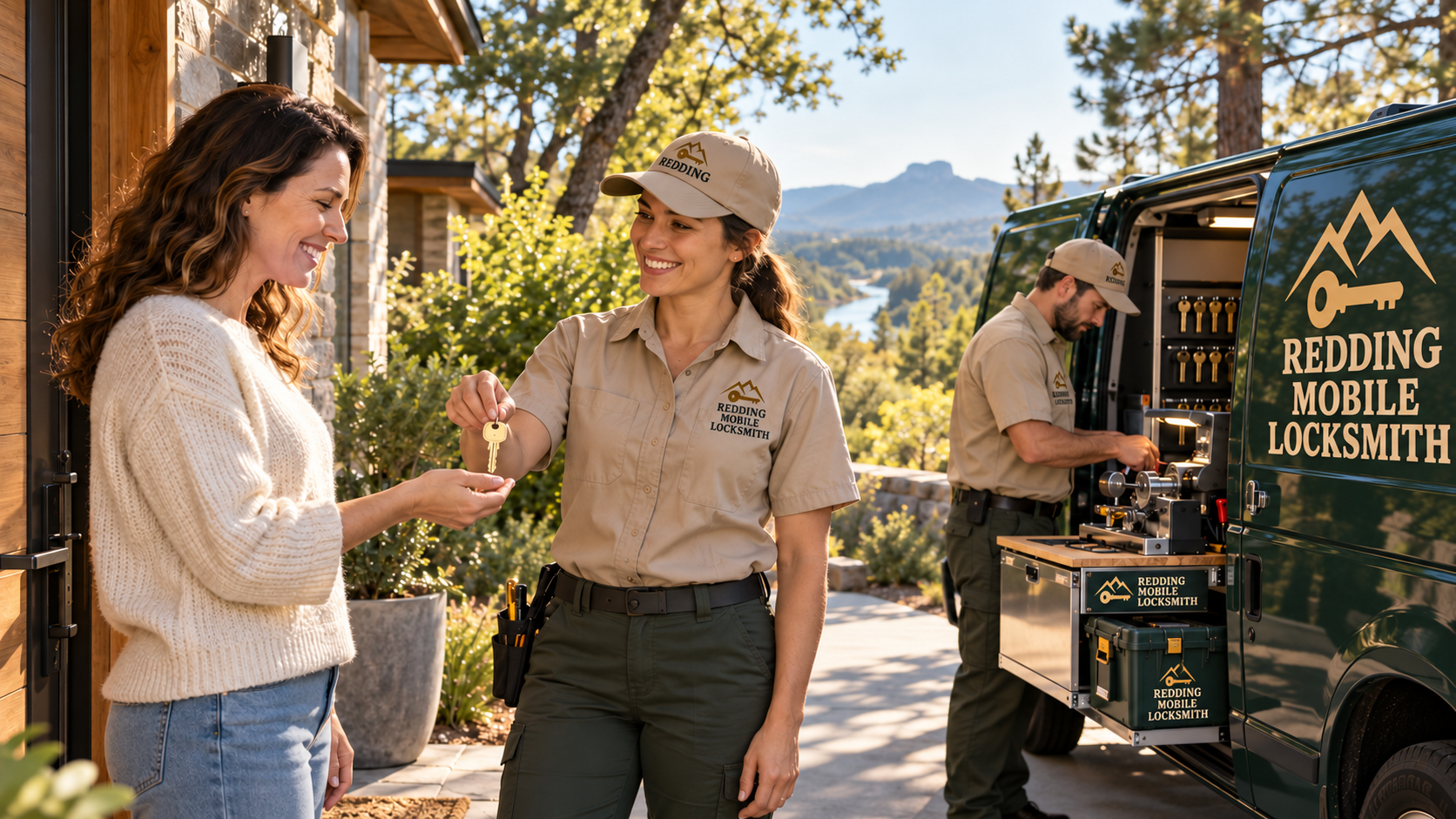
Business doors
An owner with gates and outbuildings
Imagine the owner of a piece of acreage outside Mount Shasta. There is a main gate off the road, a second gate to a back pasture, a barn, a workshop, a small office and a shed with equipment. Every one of those has a door or a latch, and each was fitted by a different person in a different decade.
This is a made up picture, not a real customer, but it is a very good test of how to think about hardware. The question is never simply which lock is strongest in general. The question is what each door does, who goes through it, how often, and what happens if it fails. Answer those, and the choice almost makes itself, which is a relief for anyone who has stood in a hardware aisle staring at forty similar boxes.
Our overview of door hardware for business covers the whole service. Here we apply it to the kinds of buildings you find around Mount Shasta, from downtown shops to rural properties, and we keep the language plain so you can follow along without a trade background. We do not push any product line, and we do not name brands, because the type of hardware matters far more than the label printed on the box.
Start with the use of the door
Doors fall into groups by purpose. There are main entrances, where customers or visitors come in. There are staff doors, used daily by people with keys or codes. There are storage and utility doors, rarely opened but holding valuable things. And there are exit doors, which must let people out reliably in an emergency.
Each group wants different hardware. A public entrance wants a lock that can be opened easily during business hours and secured at night. A staff door wants something durable and easy to rekey. A storage room wants a solid deadbolt and a sturdy strike. An exit door wants hardware that opens from inside without a key or special knowledge.
Make a short list of your doors with a line about each: who uses it, when, and what it protects. That list is the most useful thing you can hand a locksmith, because it turns a vague request for better locks into a precise set of jobs that can be planned sensibly.
Cylinders, mortise locks and heavy duty latches
Most commercial doors use one of three families of lock. A cylindrical lock is the familiar knob or lever set found in many offices. A mortise lock sits inside a pocket cut into the edge of the door and is often found in older buildings and in heavier use. A deadbolt adds a separate bar for extra strength.
Older downtown buildings in a mountain town often have mortise locks or other long lived hardware. These can be repaired, rekeyed or modernised rather than replaced, which keeps the door's character and avoids cutting a new hole. A locksmith who knows these locks can often bring them back to good order.
Commercial grade hardware is built for heavier use than the kind sold for houses. It tolerates more cycles, resists wear and holds up better when a door is used hundreds of times a day. If a shop door is failing every year, the lock may simply not be heavy enough for the job. Our neighbors page on what lock grade means explains the idea.
When you compare options, ask how the lock is expected to be used. A closet that opens twice a week can live with light hardware. A front door that opens two hundred times a day cannot. Matching the grade to the traffic prevents the cycle of repair, repair and repair that frustrates so many small business owners.
- Cylindrical locks suit light to moderate use in offices and shops.
- Mortise locks suit older buildings and heavy daily traffic.
- Deadbolts add a solid bar to any door that needs more resistance.
- Commercial grade hardware is built for many more cycles than residential hardware.
Push bars, panic hardware and exits
Panic hardware, also called a push bar or crash bar, lets people leave a building by pushing a horizontal bar across the door. It exists so that people can leave in an emergency without thinking about a latch. It is common on back doors and exits in shops, workshops and public buildings.
Whether you need it, and what kind, depends on the building and its use. Rules and codes vary, and we cannot tell you what applies to your property. Ask the local authority or a qualified professional what is required, and use a locksmith to fit and maintain the hardware properly once you know.
Maintenance matters as much as the original fitting. A push bar that sticks, a latch that does not retract fully or a bar that has come loose from its mounting can make an exit unreliable at exactly the wrong time. Test your exit doors regularly by pushing them open from the inside, listen for grinding, and look for loose screws or cracked parts. Report anything odd and have it put right before it matters.
What we can say is that exit hardware should always open from inside without a key, and that blocking, chaining or locking an exit in a way that stops people leaving is dangerous. Our neighbors page on push bars and panic hardware explains the parts in more detail.
Door closers and why they matter
A door closer is the arm and cylinder that pulls a door shut after it is opened. It seems like a minor item, but it affects security, comfort and energy use. A door that does not close fully is a door that does not latch, and a latch that does not engage is no lock at all.
In snowy weather, a closer also keeps heat in and drafts out. Closers have adjustments for speed and for the final latching push. Cold can thicken the fluid inside, so a door that closed smoothly in summer may creep or slam in winter. A small turn of an adjustment screw often restores the balance.
If a closer leaks oil, hangs loose or fights the door, it should be repaired or replaced. A failing closer can damage the door and frame over time. Our neighbors page on door closers and why they matter gives a longer explanation of how they work.
Strikes, frames and the electric kind
The strike plate is the metal piece in the frame that receives the latch or bolt. It is small, but it takes the load when someone pushes on a door, so it must be solid and well fixed. Long screws that reach the framing behind the trim make a real difference.
An electric strike replaces a standard strike with one that can release remotely. A buzzer, a button or a keypad sends power to the strike, which lets the door open without turning a key. It is handy for an office with a reception desk, a shop with a back room, or a gate controlled from a building.
Electric strikes need wiring and power, so they are a planning job rather than a simple swap. A locksmith can advise whether your frame and door suit one and what else is needed. Our neighbors page on what an electric strike is goes into more detail.
Gates, padlocks and rural properties
Acreage brings gates, and gates bring particular challenges. They are exposed to weather, they swing under their own weight, and they are often opened with cold hands in a hurry. A gate lock must be sturdy, weather resistant and easy to use, and the hasp or latch it fits to must be as strong as the lock itself.
Padlocks are the usual answer, but a weak hasp makes a strong padlock pointless. Look at the whole assembly: the post, the chain or latch, the hasp, the screws and the lock. A closed shackle padlock exposes less metal to cutting tools, and a lock with a weather cover resists freezing. Spray a little suitable lubricant into the keyway each autumn, and keep the shackle clear of dirt so it moves freely when the temperature drops.
Matching keys can help. If every lock on the property takes the same key, the owner carries one key instead of ten. A locksmith can arrange this by rekeying existing locks or fitting new ones that match. Our neighbors page on gate lock questions for country driveways goes through the choices.
Shops, offices and small downtown buildings
Mount Shasta has a lively downtown of small businesses, many in older buildings. These doors see constant use, with customers in and out, deliveries at the back, and staff coming and going at odd hours. The hardware needs to be reliable and easy to rekey when staff change.
A new business owner should treat locks as part of opening day. Rekey the building when you take possession, count the keys, and write down who holds which. Decide whether a keypad or a key suits the staff door. Our neighbors page offers a new business owner lock checklist to start from.
Think also about how the building behaves at night. Is the front door visible from the street? Is the back door lit? Is there a solid deadbolt on the delivery door, and does the strike plate sit in a sound frame? A few well chosen changes often do more than a large upgrade. Redding Mobile Locksmith can look at the doors with you and talk through priorities without pressure, one door at a time, starting with whichever worries you most.
Seasonal businesses deserve a thought of their own. If you close for part of the year, plan the closing and reopening: secure and label keys, lubricate locks before the cold, check that closers and latches work after months unused, and rekey if staff or tenants changed. A short checklist on the back office wall prevents most surprises.
Winter, snow load and exterior doors
Business doors in Mount Shasta face a hard season. Snow piles against thresholds, meltwater runs under doors, and salt and grit get into hinges and latches. A door that closes cleanly in summer may drag on a swollen frame in January, and a latch that engages in dry weather can miss its strike when ice builds on the edge.
Simple habits help. Clear snow and ice from the threshold and the strike area, wipe road grit from hinges, and lubricate moving parts with a product made for locks and hinges, not a heavy household oil that gums up in the cold. If a door sticks, adjust it before it forces the hardware to bend.
Metal doors conduct cold and can frost over, while wood doors swell. Seals and sweeps matter as much as the lock for keeping the building warm and the hardware dry. A locksmith will look at the door as a whole, and if the problem is a sagging hinge or a warped frame, say so honestly rather than selling a lock that cannot fix it. Our neighbors page on why doors sag and what it does to locks explains the effect.
Keeping keys under control
Hardware is only half of security, and the part people forget. The other half is who has the keys. A building where nobody knows how many copies exist is a building where the locks are, in effect, open. A simple key log, with a name and a date for each key, brings that back under control.
When someone leaves, collect their keys, or rekey the doors they could open. Where several doors share a key system, a master key arrangement can give managers one key that opens everything while staff carry keys that open only their own areas. Our neighbors page explains what a master key system is.
Keypads reduce key handling, but they bring their own routine. Change codes when staff leave, avoid sharing a single code between everyone, and keep a record of who knows what. For an acreage owner with many gates and outbuildings, a small number of matching keys and a written list often suit the job well.
Planning a visit and nearby towns
When you are ready to talk about hardware, send us a short list of your doors and what each is for through the request form on our contact page. Our phone line is coming soon. Photos of the hardware and the frame help, and so do notes on anything that fails.
We serve places throughout the area, including Weed and Dunsmuir, and our Mount Shasta neighborhood page collects the local pages. For household locks, see home lock service in Mount Shasta. For fitting new locks, see new lock installation in Mount Shasta.
Good door hardware is rarely noticed. It opens when it should, closes when it should and stays shut when it must. Getting there is a matter of matching each piece to its door and its use, then keeping an eye on it as the seasons change. If you read nothing else on this page, take away two habits: list your doors and what each is for, and keep a written record of your keys. Everything a locksmith can do for you builds on those two simple pieces of knowledge.
Good to know
Common questions
What is the difference between commercial and residential door hardware?
Commercial hardware is built to handle many more cycles of use and heavier abuse. Residential hardware is designed for lighter daily use. A door that sees constant traffic, such as a shop entrance, usually needs commercial grade hardware to avoid frequent failures.
Do I need panic hardware on my business doors?
It depends on the building, its use and local rules, which vary. We cannot say what applies to your property. Ask the local authority or a qualified professional, and then have a locksmith fit and maintain the hardware properly. Exit doors should always open from inside without a key.
Can old mortise locks in a downtown building be saved?
Often, yes. Mortise locks are sturdy and can be repaired, rekeyed or refitted with new parts. Replacement is sometimes needed if the lock body is badly worn or parts are unavailable. A locksmith can look at the door and tell you which path makes sense.
How can I use one key for several gates and buildings?
A locksmith can rekey existing locks, or fit new ones, so that they all use the same key. This reduces the number of keys you carry and makes it easier to hand out access. For shared use, consider a master key system with limited keys for staff.
Why does my door closer behave differently in winter?
Cold thickens the fluid in many closers, which changes how briskly the door closes and whether it latches. A small adjustment can often restore the right action. If the closer leaks, hangs loose or fails to close the door, repair or replacement is the next step.
How do I ask for a hardware assessment without a phone number?
The phone line is coming soon. Use the request form on our contact page, listing your doors, what each is for, and any problems you have noticed. Photos help. If there is danger to people, call emergency services first.