
Home / Palo Cedro / Cars and Trucks in Palo Cedro
Palo Cedro vehicles
Cars and Trucks: Mobile Key Help in Palo Cedro
When your vehicle is also your livelihood, a lost key is more than an annoyance. This is how mobile automotive service works at a curb or driveway in Palo Cedro, and what to have ready when you ask for it.
Palo Cedro vehicles
A vehicle that earns its keep
Imagine a delivery or rideshare driver who lives east of Redding and works a route that starts well before sunrise. The vehicle is the whole business. Every hour it sits is an hour of lost work, and a missing key does not care about the schedule. That driver does not want a lecture on locks, just a clear idea of what can be done and where.
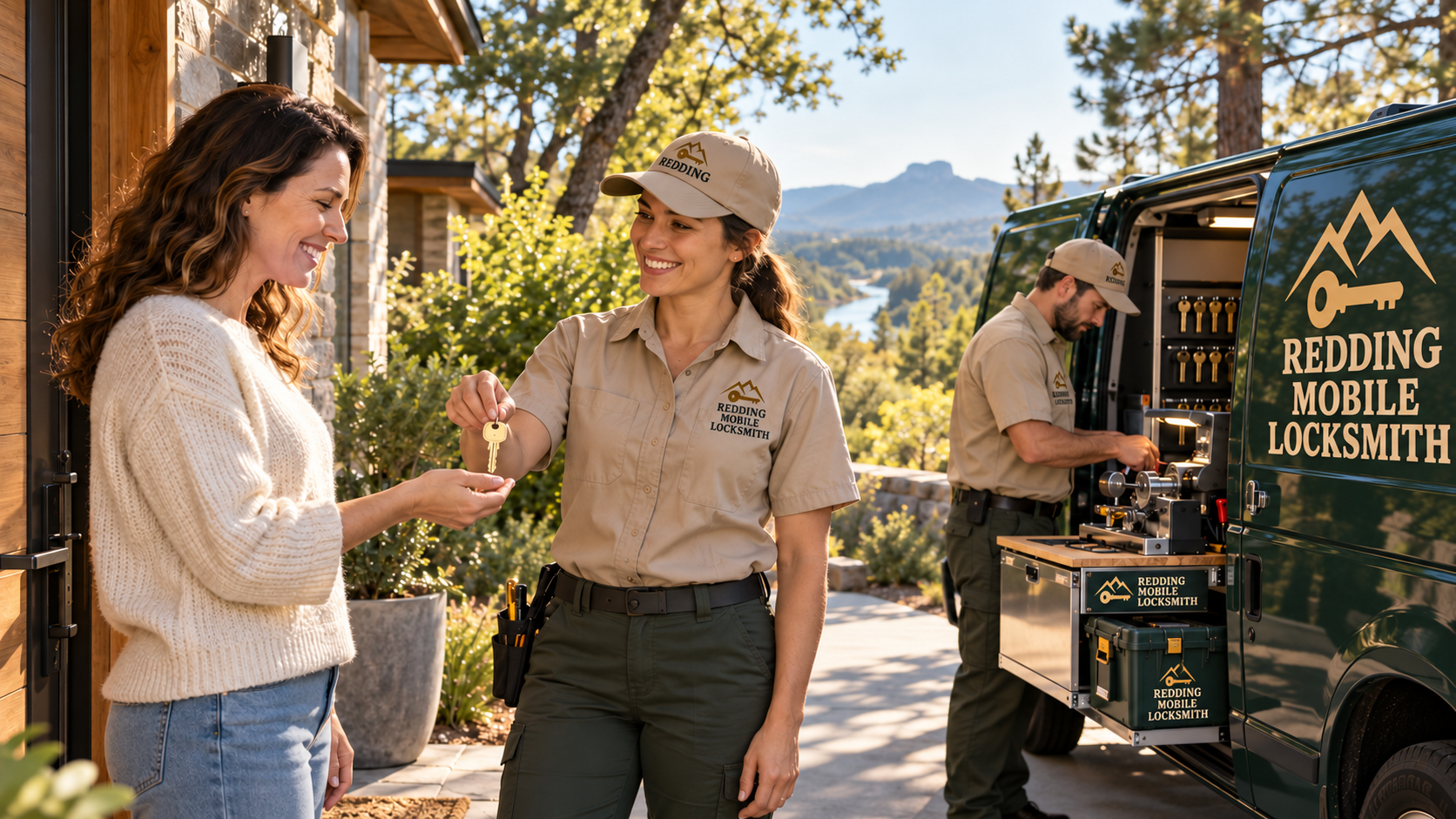
The good news is that most car key problems can be handled without towing anything. A mobile locksmith brings the workshop to the vehicle, which matters in a spread out community like Palo Cedro, where homes sit on larger lots and the nearest shop may not be next door. The vehicle stays where it is, and the work happens at the curb, in the driveway or on a wide shoulder.
In this article we walk through how that works: what we can do for entry, what we can do for keys, how the pieces of a modern key fit together, and what to prepare so the visit goes smoothly. Think of it as a column from a patient neighbor who happens to know a lot about ignition systems.
Nothing here replaces a conversation about your own vehicle, since makes and years differ more than people expect. What it does give you is a map. By the end you should know which kind of problem you have, which questions will matter and what a technician is likely to ask you before the work begins.
The four problems we meet most often
Nearly every automotive call falls into one of four groups. The first is simple entry: the keys are inside and the doors are shut. The second is a lost key with no spare. The third is a key that still works for the doors but will not start the engine. The fourth is a worn or damaged ignition that will not turn or will not release the key.
Each of these asks for a different set of tools. Entry work uses specialized equipment designed to open a door without harming paint, weatherstripping or the lock. Key work uses cutting machines and programming tools. Ignition work involves taking apart the steering column area carefully and replacing or repairing the part that has worn.
Knowing which group you fall into helps when you describe the problem. Our page on cars and trucks lays out the services in order, and the guides on getting back into a locked car and replacement car keys go deeper into the two most common situations.
How entry works without damage
People often imagine that opening a car means forcing it. In practice, the work is gentle. A trained technician uses thin, purpose made tools that create a small gap between door and frame, then reach the interior handle or lock button without scratching trim. Many vehicles have a particular method that suits their door design, and part of the craft is knowing which approach applies.
We do not teach those methods publicly, and we are not shy about saying why: the same knowledge could help the wrong person. What matters to you is that a professional can usually open a vehicle without damage, and that we ask for proof that the vehicle is yours before we do. Expect to be asked for identification and for something that connects you to the car, such as registration.
If a child or a pet is inside a locked vehicle, call emergency services first. Do not wait for a locksmith. Hot summer days in this part of Shasta County can turn a parked vehicle into a dangerous place in a short time, and emergency responders are the right people for that situation. After the immediate danger is handled, we can help with the lock.
What is inside a modern key
A key from a few decades ago was a simple cut piece of metal. A modern key is a small device. Most vehicles built in recent years contain a transponder chip, a tiny electronic part sealed in the plastic head of the key. When you turn the key, the car sends a low power signal, the chip answers with a code, and the engine control system decides whether to allow the engine to run.
That is why a plain metal copy from a hardware counter may open the door and still refuse to start the car. The metal is right, but the chip has not been introduced to the vehicle. Programming is the step that makes that introduction. Our page on key programming and fobs explains the idea in more detail.
Some vehicles use a smart key instead, a fob that lets you start the engine with a push button as long as the fob is nearby. The principle is similar: the fob and the car exchange coded messages. Both types can be replaced and programmed by a mobile locksmith with the right equipment, which is why the service van carries cutting and programming gear rather than just a set of blanks.
One more detail worth knowing is that the key and the car keep a shared list. Each key the vehicle accepts is stored in its memory. Adding a key means writing a new entry, and removing a lost key means deleting one. That list is the reason a casual copy rarely works and a properly programmed key does.
- A transponder key has a chip in the head and a cut blade.
- A remote head key combines the blade, chip and lock or unlock buttons.
- A smart key lets you start with a button and carries no traditional blade you insert.
- An emergency blade inside a fob lets you open the door when the battery is weak.
Lost every key: what happens next
The hardest call is the one where every key is gone. There is no key to copy, and the vehicle has to be told about a brand new one. The process begins with proof of ownership. We then work out which key type the vehicle uses, which may be visible from the make, model and year, and prepare a blank that fits.
The key is cut to match the locks. This can be done from the vehicle itself, by reading the lock, or from a code associated with the vehicle, depending on the model. Then the new key is programmed so the vehicle accepts it. At the end of the visit, every function should work: door, trunk or tailgate where applicable, ignition and remote buttons.
If you can find even one working key, say so when you call, because adding a key is usually simpler than starting from nothing. If the old key is lost, mention it, because you may want any lost key removed from the vehicle's memory. That step keeps a missing key from being used by someone else, and we will explain how it works.
Working a route and losing the key
Back to our hypothetical driver. Suppose the key is gone halfway through a delivery run, perhaps dropped into a bag, left on a counter or lost at a stop. The first move is to stay safe, step away from traffic and think about where the key was last seen. Retracing steps by phone is sometimes the simplest fix of all, and it is worth a few patient minutes before spending money. Call the last stop, check the bag, look under the seats and ask whoever shared the vehicle last. A surprising number of lost keys turn up in a jacket pocket or a cup holder.
If the key is truly gone, you will need to decide where the work should happen. Our van can come to the vehicle, so long as it is parked somewhere safe and legal for the work. A driveway, a store lot with permission or a wide pull off along a highway like Highway 44 can all work, depending on traffic and visibility.
For anyone who drives for a living, the most valuable step is planning ahead. A spare key made before you need it is a much calmer experience than a lost key at dawn. Ask about adding a second key while you still have the first. It costs less in time and worry than starting from zero.
Ignitions, steering locks and stubborn keys
Sometimes the key is fine and the car is the problem. A key that will not turn in the ignition may be dealing with a locked steering column, a worn ignition cylinder or a damaged key. Before assuming the worst, try turning the steering wheel slightly while you turn the key, because the steering lock can bind against the wheel when the vehicle has been parked with the wheels turned.
If the key still will not turn, or if it sticks and will not come out, stop forcing it. A key that breaks in an ignition becomes a bigger job. A technician can remove broken pieces, repair the ignition cylinder and cut a fresh key. In many cases the cylinder can be repaired or rebuilt without replacing the entire steering column assembly.
Wear on a key itself is a common culprit. A key that has ridden on a heavy ring of other keys and accessories for years wears the ignition from the inside. Lightening that ring is one of the simplest preventive habits a driver can adopt. A single vehicle key with a small fob is kinder to the ignition than a bundle that swings with every bump in the road. Our guide on a key stuck in the ignition says more.
Trucks, work vehicles and the people who share them
Palo Cedro has plenty of pickups, work trucks and utility vehicles, and these come with their own wrinkles. A truck that is shared among several workers may have keys scattered across a crew. A farm or ranch vehicle may have decades of dust in the lock. An older truck may have a plain mechanical key, while a newer one has a chip.
If more than one person drives the vehicle, think about who should be able to start it and who should not. A key that has gone missing from a crew is a good reason to reset which keys are recognized. Our article about a work vehicle lockout and who to tell covers the practical side of notifying the right people.
If you buy a used truck, ask how many keys came with it and whether the spare is a programmed one. Our guide on the extra key question when buying a used car explains why this is worth a minute of thought.
What to have ready before you ask for help
A little preparation makes a mobile visit smoother. Be ready to describe the vehicle: make, model and approximate year. Say whether you have any working key at all, whether the keys are inside the car, and whether the car has a push button start or a traditional ignition. Mention anything unusual, such as a recent battery replacement or a past key repair.
Have your identification and something that links you to the vehicle. If the vehicle belongs to an employer or relative, tell us who owns it and who has authority to approve the work. We will not open a vehicle unless we are confident that the person asking has a right to be in it, and that is a protection for you as much as for anyone else.
Choose a safe place for the vehicle if you can, and tell us the exact location. Use the request form on our contact page, since our phone line is coming soon. If it is dark, turn on lights and stay where you can be seen. Our emergency help at any hour page explains the after hours conversation.
Finally, tell us if there is anything that would make the visit harder. A vehicle parked nose in against a fence, a gate that needs opening or a dog in the yard are all easy to plan around when we know in advance. Surprises on the day are what slow a visit down, and a few extra sentences in the request prevent most of them.
Making the next time easier
After a rough morning, most drivers feel the same urge: never again. A few simple habits can make that promise stick. Keep one spare key in a safe place at home, not in the vehicle. If your key is a smart key, keep a spare fob charged and the emergency blade handy. Check the small battery in your remote now and then, and replace it before it dies.
Think about how you carry your keys. Locking the car with the key still in your pocket is easier than locking it with the key on the seat. Many lockouts start with a bag set down on the passenger seat. If you usually work from a car, pick one habit, such as patting your pocket before you shut the door, and let it become automatic.
Neighbors in nearby Palo Cedro, Redding and Millville face the same issues, and our team works across all of them. Whether you drive for a living or just need to get to work on time, the aim is the same: a vehicle that opens, starts and gets you moving again.
Good to know
Common questions
Can a locksmith come to my vehicle instead of my towing it?
In most cases, yes. A mobile locksmith carries cutting and programming tools in a service van and works where the vehicle is parked. Towing is usually only needed for mechanical damage unrelated to the key. Describe your vehicle and location so the visit can be planned properly.
Why does my copied key open the door but not start the engine?
Your vehicle probably has a transponder chip in the key. The metal blade can be copied easily, but the chip still has to be programmed to the car. Without that step, the engine control system will not recognize the key, even if it fits the ignition perfectly.
What proof will I be asked for before a vehicle is opened?
Expect to show identification and something that connects you to the vehicle, such as registration. If the vehicle belongs to someone else, tell us who owns it and who approved the work. This protects owners and is a normal part of responsible automotive locksmith service.
What should I do if a child or pet is locked inside?
Call emergency services first. Do not wait for a locksmith, and do not assume you have time. Warm days can make a closed vehicle dangerous within a surprisingly short span. Once the situation is handled by emergency responders, we can help with the lock or any damage to the door.
Is it simpler to add a spare key than to replace all of them?
Usually adding a key while you still have a working one is simpler than starting from nothing, because the vehicle can learn the new key with less work. We do not quote prices on this page, so ask about the specifics of your vehicle when you request service.
Can you help with a key that is stuck or broken in the ignition?
Yes. Please do not force it. A technician can remove broken pieces, repair or rebuild the ignition cylinder if needed and cut a fresh key. Tell us what the key and ignition feel like, because that helps us bring the right parts.