
Home / Neighbors ask / How many keys come with a used car and which ones matter?
Neighbors Ask
How Many Keys Come With a Used Car and Which Ones Matter?
Two is the usual answer, but the count is only half the story. A key that starts the car, a key that only opens a door and a key that does nothing at all can all be called keys.
Neighbors Ask
The usual answer and why it is not enough
When a car leaves the factory, it normally comes with two keys or two fobs. That is the number most buyers expect, and it is the number that gets quoted in conversation. Used cars are another story. Over the years, keys get lost, broken, left with a friend, given to a mechanic or tossed in a drawer and forgotten, so the number you actually receive may be two, one or occasionally none.
The count alone does not tell you much. A seller might hand over two keys where one is a fully working fob and the other is a plain metal blade that opens the door but cannot start the engine. Both are keys, but only one is useful in an emergency. Counting what you receive is the first step. Testing what each one does is the part that matters.
So think of the question as a ranking. Which key can start the car? Which can lock and unlock it from a distance? Which one is only a backup? Knowing the difference lets you decide whether you are fine or need a spare. Our page on replacement car keys explains how spares are made.
The key that starts the car
This is the one that matters most. On a car with a transponder system, the key that starts the engine carries a small chip, and the car must recognize that chip. On a push button car, the fob inside the cabin plays that role. If you hold only one key that can really start the car, you effectively have one key, no matter how many other pieces of metal are in the bag.
Test it by starting the car with the key, shutting it off, removing the key and starting again. Do it twice. A key that works the first time and fails the second may have a loose chip or a worn blade. A key that starts the car only when you jiggle it is on its way out, and you should plan for a replacement while the engine still runs.
Pay attention to how the key feels, too. A healthy key slides into the ignition with a smooth, even resistance and turns without a hitch. A gritty feel, a stop and start motion, or a need to pull the key slightly outward while turning are signs that either the key or the cylinder has worn. Neither is a catastrophe, but each is a reason to ask questions before you hand over money.
If the car uses a fob and a start button, check that it starts with the fob inside and refuses to start when the fob is out of range. Many fobs also carry a backup spot where you hold them against the dash if the battery dies. Ask the seller to show you how it works. Our guide on transponder chips explains the idea.
The remote that locks and unlocks
Many cars have a second layer: a set of buttons for lock, unlock, trunk and sometimes a panic alarm or remote start. These are separate circuits from the chip that starts the car. A key can start the engine perfectly well with dead remote buttons, and a remote can lock and unlock the car with a damaged chip that will not start it.
For a buyer, that means you have to test both functions on each key. Press every button and watch the car. If a remote works at close range but not from across a lot, the battery may be weak. If it does nothing at all, the remote may need to be reprogrammed or replaced. The page on key programming and fobs describes how remotes are coded to a car.
Do not treat dead remote buttons as a minor annoyance. They can mean more trips to the driver door in rain or snow, and a remote that locks the car from a distance is a convenience many drivers rely on. In mountain towns where a cold morning is no time to fumble, it is nice to have all functions working. Battery trouble is the most common cause of weak remotes and the easiest to rule out. A small coin cell inside the fob powers the buttons, and it can weaken long before it dies completely. Replace it, test again, and only then decide the remote needs real attention. The rubber pads inside many fobs also wear through with years of pressing, which a technician can spot on sight.
The valet key and the door only key
Some cars come with a simpler key, sometimes called a valet key, that opens the door and starts the car but does not open the trunk or glove box. Others come with a door only key that has no chip and cannot start the car at all. These are not defective. They are designed for particular uses, such as handing a key to a parking attendant.
The trouble starts when a seller counts them all as keys and does not explain the difference. A door only key is still handy if you are locked out, but it does not replace a spare that can start the car. A valet key that starts the car but does not open the trunk can be a fine daily key until you need to reach the spare tire.
Ask the seller to point out each key and say what it does. If any key is missing a function, that is not a deal breaker, but it is worth knowing before you agree on terms. Our column on the extra key question offers questions to ask when you are shopping.
- Full key: starts the engine, locks and unlocks, opens the trunk.
- Valet style key: starts the car and opens the doors but not every compartment.
- Door only key: opens the door, does not start the engine.
- Fob with a hidden blade: starts the car by proximity and carries an emergency metal key.
- Old or mismatched key: looks right but belongs to a previous lock or ignition.
The hidden emergency blade
Many push button fobs hide a small metal blade inside the case. Slide a latch, pull the blade out, and you have a key that fits a lock hidden under a cap on the driver door handle. It exists for the day the fob battery dies or the car battery is flat and the electric locks will not respond.
Most owners never learn this feature exists until they need it, and a surprising number of used cars come with the blade missing. A fob without its blade still works day to day, so no one notices. A buyer who checks for it before the sale can avoid a very uncomfortable moment later.
Take the blade out and try it in the door. Look for the small slot or cap on the handle that hides the keyhole, and try turning the lock. If the blade is not there, a replacement is usually simple, and a technician can cut one. For related help, see what to do when a key fob stops working.
The key code card and other paperwork
Some vehicles ship with a small card or tag that shows a code connected to the key cuts. Others have a number stamped on the lock or recorded in a dealer's file. These codes make the job of cutting a replacement key easier, but they are not required, and a good technician can work from the car itself when a code is missing.
If the seller has such a card, ask for it and keep it somewhere safe, away from the car. A code is sensitive information because it describes how to cut a key. Do not post pictures of it or send it casually, and do not leave it in the glove box.
Beyond the code card, ask for any manuals, service records and receipts that mention keys. A receipt for a replacement fob tells you the car has had a key made recently. A repair record for an ignition cylinder tells you that older keys might no longer match. These small papers give a technician a head start compared with beginning from nothing. Our column on what key code cutting means explains how codes are used.
Which keys are worth keeping and which to retire
Once you own the car, you can sort the bag. The key that starts the car and has working remotes becomes your daily key. A second full key becomes your spare, stored at home. A door only key can go in a wallet or a safe place for lockouts. A key that fits nothing can go in the trash.
Label what you keep. A tiny dot of paint, a colored cap or a tag with your own code lets you tell the daily key from the spare at a glance, and it prevents the mistake of carrying both on one ring. Keeping both together defeats the point of having a spare, because losing the ring loses everything at once.
If you do not know where a key came from, treat it with caution. An unlabeled key from a used car could belong to the ignition, to a past owner's house, or to some unrelated lock. Do not assume it is harmless. If you are unsure, a technician can look at it and tell you what it fits.
Retiring old keys has a real purpose. On many cars, a technician can change the list of keys the vehicle remembers, so that earlier keys stop working. That is an option when you cannot account for who held a key before you. It is not needed for every car, but it offers real peace of mind after a private sale. See cars and trucks for what we handle.
What a missing key costs you in effort
Missing a key is not a catastrophe, but it takes effort to solve. With one key in hand, a technician can often copy it by cutting the blade and coding a new chip to the car. That is a manageable errand. The car does not even have to be moved if the technician comes to you.
With no key in hand, the job grows. The technician has to read the car's information, cut a blade to match the lock, and program a chip into the car's computer. It takes longer and calls for more equipment. This is why it pays to make a spare while you still have a working key.
The lesson for a buyer is simple. A single key is a prompt to act early, not a reason to panic. The earlier you add a spare, the simpler the work and the fewer surprises. Keep the spare somewhere that is not the car, so a locked door cannot take both keys at once, and tell one trusted person where it lives. Picture a driver at a trailhead with a key locked inside and the spare back home in a drawer; the spare did nothing for them. A good spare is one that can be reached when it is needed. Our page about making a key with no key at all goes deeper.
Fleet and work vehicles bought used
Buying a used work truck or van adds another wrinkle. Such vehicles often pass through many drivers, and keys multiply. Employers sometimes keep spares in a lockbox in the office, and a previous company may still hold a set. If the vehicle came from a business, ask the seller how many keys the company issued and whether all were returned.
In that case, rekeying or resetting the key list is worth a serious look. A vehicle that carries tools or equipment should not have unknown keys circulating. The same applies to a car previously used by a rental company or by a family with several teenage drivers.
For a business buying vehicles, key control is part of the job. Keep a simple log of who holds each key, return keys when people leave, and consider resetting the list when staff change. Our column on work vehicle lockouts and who to tell covers the handoff side.
Planning the next step with a local team
After the test drive and the paperwork, the plan is easy to state. Confirm how many working keys you hold, decide whether you want a spare, and have it made before the first one goes missing. The key you add today is the one that saves a weekend later.
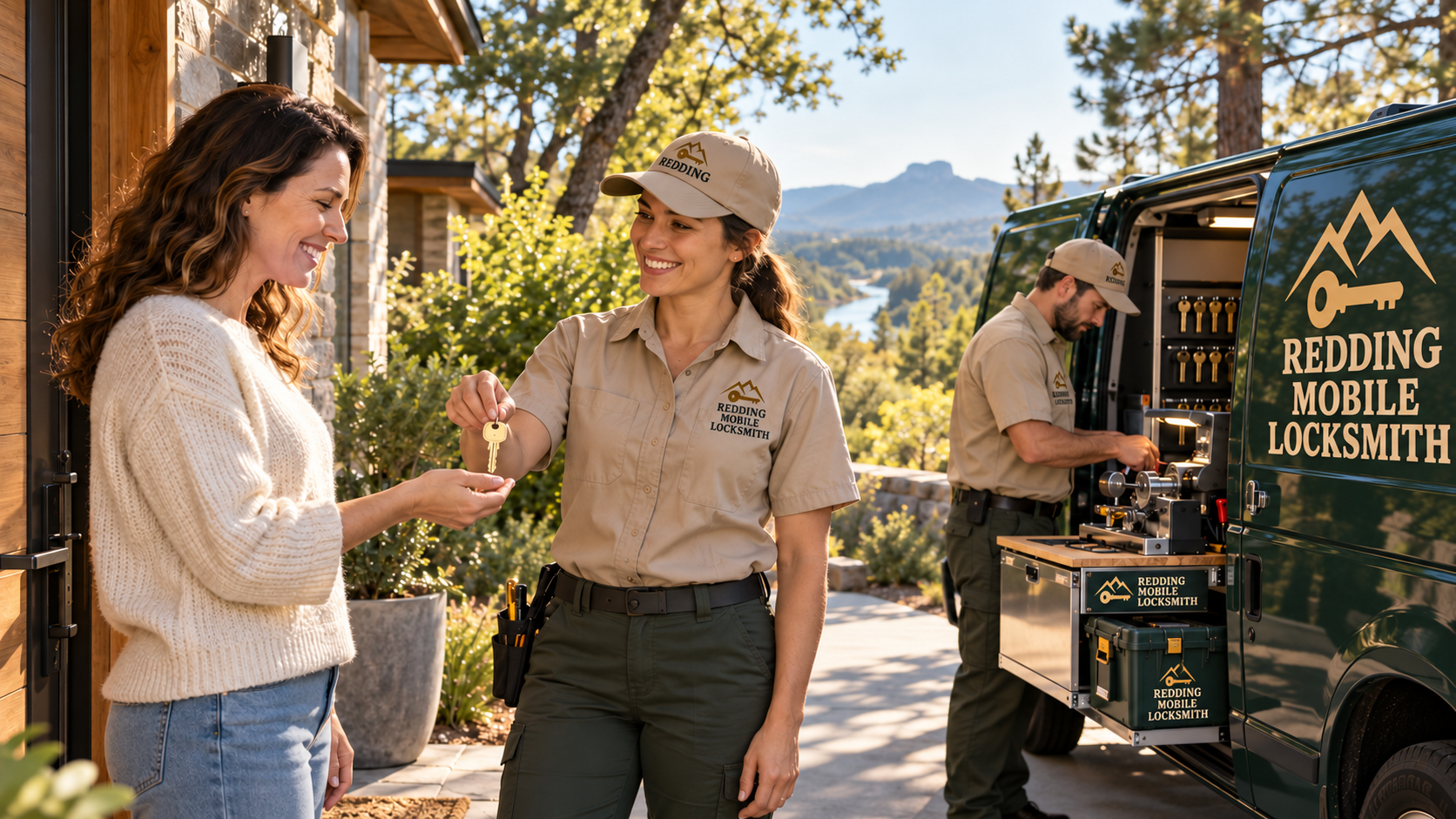
Redding Mobile Locksmith serves seventeen communities in Shasta County and Siskiyou County and works around the clock. A branded team arrives in a service van carrying key cutting and programming equipment, so most key work can be handled where the car is parked. The phone line is coming soon, so start with the request form.
If you live near Redding, Cottonwood or Weed, those local pages describe the areas we serve. If you are already stuck with a car you cannot open, read locked out of your car first, since it explains what a professional does and what you can prepare.
Good to know
Common questions
Is two keys the normal number for a used car?
Two is the usual number that left the factory, and a good seller will hand over both. Used cars often have fewer, because keys get lost over the years. Always count what you receive and test each one rather than relying on what the seller says.
Does a key that opens the door also start the car?
Not always. Some keys only open the door, and cars with a transponder system need a coded chip to start the engine. A metal blade that fits the lock but carries no chip will turn the ignition without letting the engine run.
What is the most important key to check?
The one that starts the engine. Test it more than once, with the engine fully shut off between tries. If you have a push button car, test that it starts with the fob inside and refuses with the fob out. That key is your daily driver.
Why does the emergency blade matter?
It lets you open the door when the fob battery is dead or the car battery is flat. Many used fobs are missing this blade without anyone noticing. Slide it out, try it in the hidden door lock, and replace it if it is gone.
Can I tell if old keys still work on my car?
You can tell whether a key starts the car by trying it. You cannot tell who else holds old keys. A technician may be able to reset the list of accepted keys on some cars, which is worth asking about after a private purchase.
How do I ask for a spare key to be made?
Use the request form on the contact page. List the make, model and year, how many working keys you have, and your town. If you can, say whether the car uses a push button start. The phone line is coming soon.