
Home / Neighbors ask / Mailbox lock questions
Mailbox locks
Mailbox lock questions, answered the neighborly way
Mailbox locks are small, plain looking and easy to ignore until the key goes missing. Here are the questions neighbors ask most, from lost keys to stuck cylinders and who is allowed to change what.
Mailbox locks
Why a lock on a mailbox is a bigger deal than it looks
Most of us treat the mailbox as a chore on the way to the car. Yet it is where bank letters, tax forms, new cards, medical notices and ballots all pass through. A mailbox lock is a modest piece of hardware that keeps that stream of personal paper out of the wrong hands, and when it fails, the inconvenience arrives in a hurry.
The questions we hear tend to be practical. The key is lost. The lock is stuck. The little door will not close. Someone wants a spare for a house sitter. A new owner does not know who has keys to the box. Another neighbor asks whether it is all right to replace a lock on a shared unit. These are all reasonable, and most have simple answers.
One thing to say at the start is that mailbox rules differ depending on the kind of box and who owns it. Some boxes belong to the homeowner, some to the property owner, and some to the postal service. We will not pretend to know the rules for every case. Where a rule matters, we will tell you what to ask and who to ask. The rest is locks and keys, and that we can talk about all day.
The kinds of mailbox locks you will meet
The first kind is the simple locking mailbox at a house, often a metal box on a post or wall with a small cam lock on the door. A cam lock has a short flat arm on the back, called a cam, that turns with the key and catches behind a lip to hold the door shut. These are common, small, and quite easy to replace.
The second kind is the cluster box, which you see at apartment complexes and many subdivisions in places like Redding, Anderson and Shasta Lake. A cluster box is a bank of small doors, each with its own lock, usually with a larger parcel compartment. Each door has a different key, and the main access panel is managed by someone else. You cannot generally change these yourself, and in many cases they are the property of the building owner or the postal service.
The third kind is the rural roadside box and the group of boxes you see out in the country along highways and county roads. Here in places like Cottonwood, Palo Cedro, Millville and out toward Fort Jones and Etna, many boxes live on long stretches of road with no shelter at all. They face sun, rain, frost and the occasional bump from a passing plow in the mountain communities. The locks on these boxes take a beating, and the door may swell shut in damp weather.
- A cam lock is the most common type on a simple house mailbox.
- Cluster boxes have separate locks and keys for each door.
- Parcel lockers inside a cluster box are managed by the mail carrier.
- Rural roadside boxes face weather that can freeze or rust a lock.
I lost the key to my mailbox. What now?
Start by figuring out what kind of box you have. If it is a plain locking box that belongs to you, the problem is easy. A locksmith can often make a replacement key from the lock, replace the cylinder with a new one and give you fresh keys, or open the box without damaging it if needed. For a basic cam lock, replacing it is usually simpler than trying to match the old key.
If the box is a cluster unit or part of an apartment complex, the answer is different. Those locks are usually controlled by the property manager or the postal service. Losing the key does not mean you can have your own made. Ask your manager or the local post office what to do. They will have a process, and in some cases a fee or an identity check, and those details are theirs to explain.
While you wait for a new key, ask for mail to be held or picked up at the counter if that is an option. If you can, write down the number stamped on the old key or lock, since it sometimes helps whoever is cutting a replacement. If you suspect your key was stolen rather than lost, tell the manager or the postal service so they can decide whether the lock needs to be changed. And do not try to force the door. A bent door is harder to repair than a lost key.
My mailbox lock is stuck or the key will not turn
A stuck mailbox lock is nearly always one of four things: dirt, rust, cold or a worn key. Mailboxes live outside, and the lock sits right at the front, where dust, spiderwebs and moisture collect. A small amount of dry lubricant, like graphite or a dry spray designed for locks, can loosen up the pins. Work the key in and out a few times after applying it, so the lubricant reaches the whole length of the keyway. Skip heavy oils, which gum up and collect grit.
If the key goes in but will not turn, try a clean copy if you have one. Keys wear out, and a copy of a copy can drift from the original shape. If the second key works, the first is worn and should be replaced. If neither works, the lock is the culprit, and it is probably time for a new one. Cam locks are inexpensive, and the swap takes a few minutes.
In cold mountain towns, a frozen lock after a storm is common. Do not pour hot water on it, which can refreeze and make things worse. Warm the key in your hand or with a lighter touch, and try a de icer made for locks. If the door itself is frozen, wait for the weather to ease. Forcing a frozen door tears the hinge or cracks the plastic.
Can I change the lock on my own mailbox?
On a mailbox you own and that stands on your property, changing the lock is generally a hardware question and not much more. Rules can vary, though, and some neighborhoods, associations and property owners have standards for the look and type of mailbox. If you live in a place with an association, ask whether anything limits what you can install.
On a shared box, like a cluster unit or apartment bank, you generally do not change the lock yourself. Those locks are part of a system that includes the key control of the postal service and the property owner. Replacing one without permission can cause trouble with mail delivery. The sensible move is to contact the manager and let them handle it, or ask them to authorize a locksmith.
If you are not sure which type applies, check with the post office or the person who manages the property before you buy a lock. It is a short question and a clear answer. We are happy to talk through the hardware, but we will not tell you what the rules are, because we do not make them and they vary.
What kind of replacement lock should I buy?
Replacement locks for plain mailboxes come in a few shapes. A flat cam lock with a round face is the common style. The size of the hole in the door and the length of the cam matter, so measure before you buy. Take the old lock to the store if you can. Most are held by a nut or a small clip behind the door.
Think about how you use the box. If several people need access, like a household with many members, a lock that comes with several keys is a plus. If you want a tough option for the weather, look for a lock with a cover or a sealed face. A lock with a spring loaded dust cap is a nice touch for outdoor use.
Some people choose a combination or a keypad. They can be handy for rentals or vacation homes where keys change hands, but they also need care. A code can be shared by accident. Keep it simple and change it when people move out or off the list. Avoid obvious choices like a birth year or a repeated digit, and never write the code on the box itself or on a note stuck nearby. If you manage a rental, the same code on a mailbox, a lockbox and a gate is an invitation for trouble, so give each its own. If you want a deeper look at how keys and codes get shared, our guide on how many keys a household should keep offers a good starting point.
Mailbox keys and the rest of your key ring
It is easy to forget the little mailbox key, tucked on a ring with a dozen others. Yet it counts. A key that opens your box is a key that could be used by anyone who finds the ring. If you lose a set, think about whether the mailbox key was on it. If so, consider having the lock changed or letting the manager know.
The same is true when you move into a new place. Ask the previous owner or the manager who has keys to the mailbox, and consider rekeying or replacing the lock. This is a small step that mirrors what we recommend for the doors, as described in our guide on whether to rekey after buying a house.
In a rental, remember that the mailbox is often controlled by the owner, so ask before you change anything. And if you leave a key with a house sitter, write down who has it and ask for it back when the stay ends. These habits keep the little things from adding up to a bigger worry.
Mailboxes and mail security
Mail theft is a real concern in many communities, and a good lock is only part of the answer. A box that stays full for days invites trouble. If you will be away, ask a neighbor to collect your mail, or ask the postal service whether it can hold your mail while you are gone. Do not leave outgoing mail with the flag up in an unlocked box.
A solid, well mounted box helps. A box that sways on its post, or has a door that does not close firmly, can be opened without the key. Check the hinges and the latch. Make sure the door shuts flush. A small repair can matter more than an expensive lock.
If you suspect your mail has been tampered with, tell the postal service. We are not the right people for mail fraud, and we do not give legal advice. What we can do is make sure your lock and box are in good shape so they do their job. If a lock was damaged, replace it. If the box is bent, replace the box.
When a locksmith is the right call
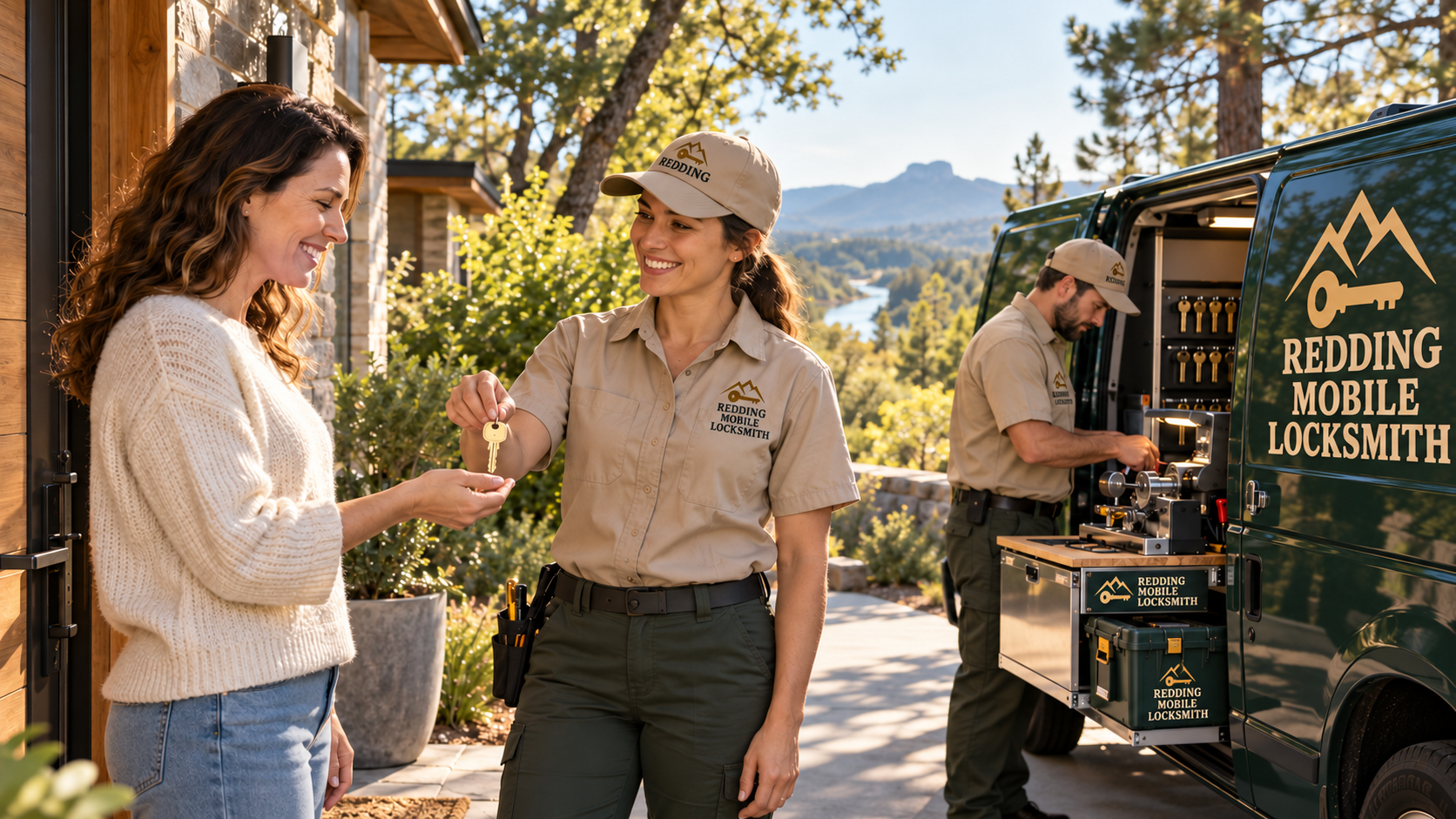
For a basic house mailbox, a locksmith visit is a good idea when you have lost the only key, when the lock is jammed and you cannot get your mail, or when you want several matched keys for a household. A technician can usually open the box carefully, replace the cylinder and cut new keys on the spot. The van carries key cutting equipment and common hardware for exactly this kind of small job.
For a cluster box or apartment bank, the property manager decides. If they authorize a locksmith, we can talk about what is needed, but we will not work on locks you are not entitled to change. If you are not sure, ask first. That is the neighborly thing to do, and it keeps everyone on the same page.
If you want help, use the request form and tell us the type of box, where it is, and what is wrong. A photo of the lock and the door helps. Our lock repair and adjustment page describes how we handle small repairs, and our home lock service page covers what we do for houses.
Small habits that save a lot of trouble
A few small habits keep a mailbox lock working. Put a dab of dry lubricant in the keyway once or twice a year, particularly before winter. Keep a spare key somewhere safe and not on the same ring as your car keys. Close the door fully and check that it latches.
If you share a box or a drive with neighbors, agree on who holds spare keys. In rural areas, where boxes may be clustered at the end of a lane, a shared habit makes life easier. Keep a note of who has keys and when they were last changed. When someone moves, change the lock.
Finally, treat the mailbox as part of your home security. It takes little effort to maintain and causes real hassle when ignored, because so much of what arrives in that box is personal and hard to replace. If you want to see how the rest of your locks measure up, our guide on how to judge whether your locks are good enough walks through the main doors and what to look for.
Good to know
Common questions
Who do I call if I lose my cluster mailbox key?
Contact the property manager or the local post office. Cluster box locks are usually controlled by them, not by you, and they have a process for issuing new keys. A locksmith can help only if they authorize it. Ask what they require, since the steps vary from place to place.
Can a locksmith make a mailbox key without the original?
For a simple house mailbox with a standard cam lock, often yes. A technician can make a key from the lock, or replace the cylinder and cut new keys. For shared or postal boxes, you need authorization from the owner or manager before anyone works on the lock.
Why does my mailbox lock stick in cold weather?
Moisture in the keyway can freeze, and the metal parts contract in the cold. A dry lock lubricant often helps, as does warming the key in your hand. Avoid hot water, which can refreeze. If the lock keeps sticking, replacing it is usually simple and inexpensive.
Should I use oil or graphite in a mailbox lock?
Dry lubricants, such as graphite or a dry spray made for locks, are better outdoors because they do not attract dust. Heavy oil collects grit and can gum up the pins, making the lock harder to turn over time. Use only a small amount.
Is it okay to put a combination lock on my mailbox?
On a box you own, it is generally a hardware choice, though neighborhood or association standards may apply. On a shared or postal box, you should not add your own lock. Ask the manager or post office what is allowed before changing anything.
How often should I change my mailbox lock?
There is no set schedule. Change it when you move in, when a key is lost or stolen, when someone with access leaves, or when the lock starts to fail. Treat it like the other locks on your property and match the habit to your situation.