
Home / Dunsmuir / Emergency Help Any Hour in Dunsmuir
Dunsmuir, any hour
Emergency Lock Help in Dunsmuir, Any Hour of the Day or Night
When you cannot get into a house or a car in Dunsmuir, the hardest part is often not knowing what happens next. This page walks through the conversation, the questions, and what the technician needs from you.
Dunsmuir, any hour
Before the call: take one breath and look around
Most lock emergencies feel bigger in the first minute than they turn out to be. The door is shut, the key is on the wrong side of it, and a whole evening plan has quietly collapsed. Before you reach for your phone, take one slow breath and look at your surroundings. Are you in a safe, lit place? Is anyone inside who needs help? Is the weather a danger? Those three answers decide how urgent this really is.
Dunsmuir is a small town in the upper Sacramento River canyon, with Interstate 5 and the railroad running through a narrow valley. Winter nights here are cold, and older homes sit on steep lots where a porch light may be the only illumination on the street. If you are outdoors in cold weather without a coat, that changes the picture from an inconvenience to something that deserves a plan for warmth first.
If anyone is in danger, whether that is a child or pet locked in a vehicle, a person inside a home who may be ill, or a threat nearby, call emergency services first. A locksmith is a good answer to a locked door and not a replacement for an ambulance, the fire department or the police. Everything else on this page assumes the situation is stressful but safe.
A caregiver on the wrong side of the door
Imagine a caregiver visiting a relative who lives alone in an older Dunsmuir house. They arrive for a regular evening check, knock, and hear nothing. The spare key they were told about is not where it used to be. They are not sure whether the relative is asleep, out with a neighbor, or in trouble inside. This is exactly the kind of moment where staying calm and sorting the facts matters most.
The first move is to treat it as a welfare question, not a lock question. Try the relative's phone, knock loudly, check windows from the outside only if it is safe, and ask a neighbor whether they have seen anything. If there is any sign that the person may be hurt or ill, call emergency services and let them decide how to enter. A locksmith can then help secure the door afterward, but the safety call comes first.
If the relative is simply out and the caregiver is locked out, the conversation with a locksmith becomes ordinary. The technician will want to know that you have a right to be there, so be prepared to explain who lives at the address and how you are connected. It is a reasonable question, not an accusation, and it protects the person whose home it is. Our guide for older relatives living alone covers the longer term.
How to ask for help
Redding Mobile Locksmith works around the clock, and the way to start is the request form on the contact page. The phone line is coming soon, so the form is the way in for now. You can write down what has happened in your own words, and a dispatcher reads it and follows up. Think of it like writing a short note to a neighbor who happens to be an expert.
A good request has the basics. Give the town and which kind of lock is involved, such as a front door, a back door, a garage entry or a vehicle. Say what you tried and what the lock does now, for example whether the key turns, jams or will not enter. Say whether you are outdoors and whether anyone is waiting with you. None of this needs technical language.
What you do not need to do is argue about the outcome ahead of time. Do not promise yourself that it will be a short job, and do not worry about guessing the right term for a lock. The dispatch conversation is designed to figure that out. Our overview of emergency help any hour explains the service in general, and this page is the Dunsmuir version of that conversation.
What a dispatcher is listening for
When someone takes your request, they are quietly building a picture. First, is anyone at risk right now? Second, what are we dealing with, a house, a car or a business? Third, where exactly are you, and can the technician find the spot easily? Fourth, are you the person who has the right to authorize the work? Each answer helps decide what tools and parts go in the van and how to plan the route.
Location is where small towns get tricky. In Dunsmuir, driveways on steep lots can be hard to spot at night, and a house may be set back among trees. A short, plain description of how to find you, like a landmark you can see or the side of the street you are on, saves confusion. We are not asking you to describe streets in detail on this page, and you do not have to. Give what you can see and what the technician will notice on arrival.
The dispatcher will also ask for a way to reach you while the technician travels. If you are going to walk away to warm up, say so, and say where you will be. It is perfectly fine to wait in a neighbor's home, a vehicle with the heater running or another safe place. The technician would much rather find you in a warm car than shivering on a dark porch.
What the technician needs from you on arrival
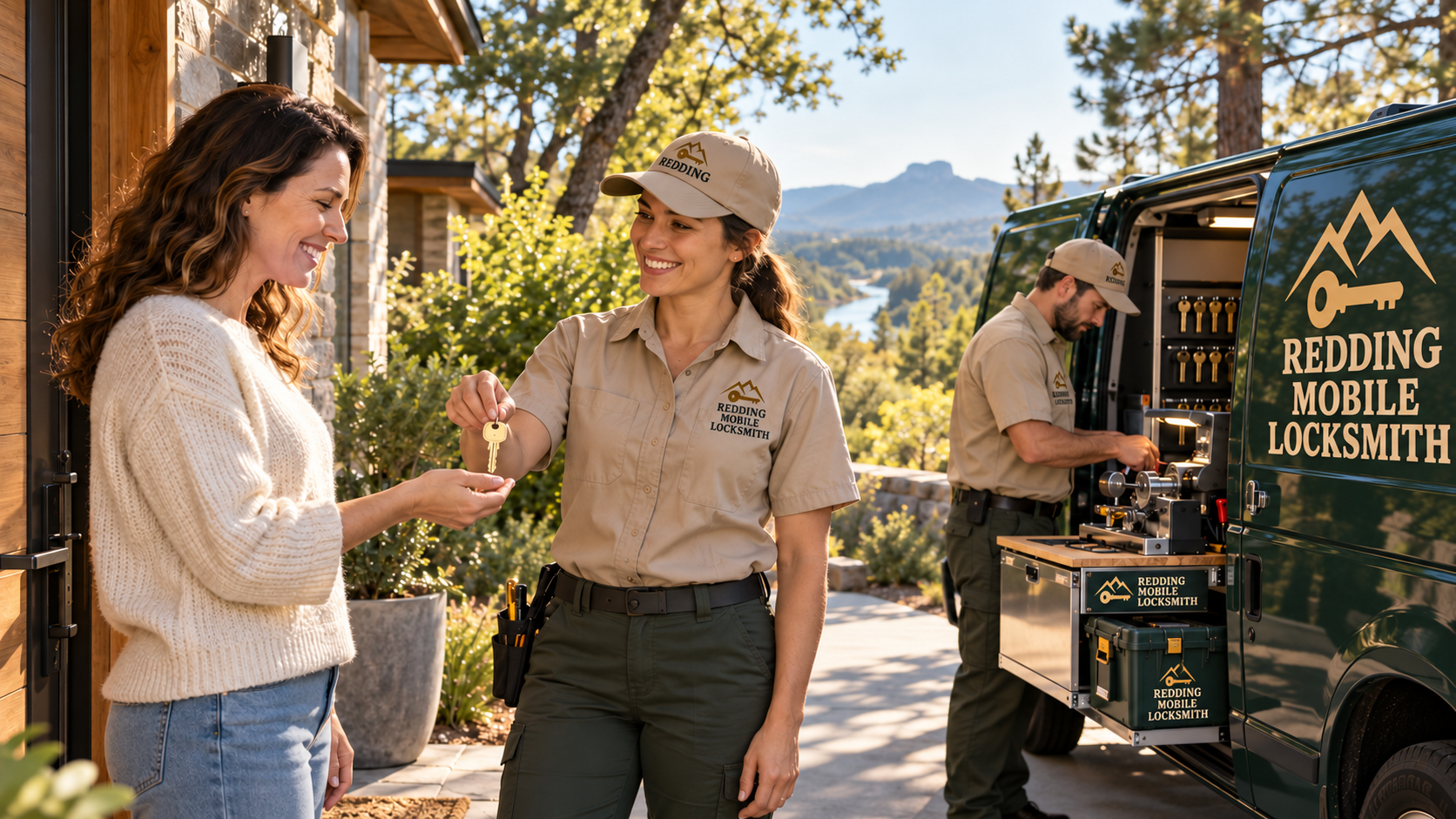
When the van pulls up, you will see a branded vehicle and a technician in uniform. Before any tool comes out, a reasonable technician will ask you to show you belong at this door or car. For a house, that might be a utility bill or an ID with the address, a piece of mail, or something inside that only a resident would know. For a car, it is usually the registration and a photo ID that matches. Have these ready, or tell the technician what you can offer.
This step is more than paperwork. It is how a locksmith protects people from someone pretending to be the owner, and it is a good sign if the technician is careful about it. If you are a caregiver or a friend rather than the resident, expect that the technician may ask to speak with the resident or the property owner. Be patient with that, and offer another way to confirm if you cannot reach them. Our guide on knowing a locksmith is the real thing works the other direction and helps you check them.
The technician will usually look at the lock and the door before doing anything, explain what they plan, and tell you whether the work will leave the lock usable. In many cases a professional can get a door open without damaging it. In some, the lock must be replaced. If a replacement is needed, ask what changes, and ask for the options before work begins.
Houses, cars and the differences that matter
A house lockout and a car lockout feel similar but are handled differently. For houses, the technician looks at the type of lock, the condition of the door and any extra bolts. A single deadbolt, a handle with a latch and a hidden chain are all different problems. For cars, the technician needs to know the make and year, whether the car has power locks, and whether the key is inside. Our pages on locked out of your home and locked out of your car explain each in more detail.
Vehicles bring a few extra questions. Is the engine running? Are children or pets inside? If the answer to the last question is yes, call emergency services immediately rather than waiting for a locksmith. If the car is parked beside Interstate 5, in snow, or on a narrow canyon road, tell the dispatcher so the technician can plan to approach safely and so you can move to a safer spot while you wait.
In both cases, take a moment to think about what is inside. If your phone, wallet or medication is locked in, say so. Those items change the urgency and the plan. A technician cannot give medical advice, and neither can we, but they can respond to how serious the situation sounds.
Staying safe while you wait
Waiting is the part nobody plans for. In a cold canyon town, the wisest thing you can do is get out of the weather and make yourself visible. Put on whatever layers you have. If you are in a vehicle that still works, keep the engine running only in a space with good ventilation and never in a closed garage. If you are on foot at night, stand where lights reach you, not hidden behind a hedge.
Do not try to force a door or break a window unless there is a real emergency. People often hurt their hands or damage frames that could have been saved. A broken window usually costs more to fix than the lock call that would have avoided it. Our guide on what a lockout is and what to try first lists a few safe checks, like trying other doors or asking whether a spare is nearby.
If you feel unsafe because of who is nearby, move to a place with people and tell the dispatcher. They would rather adjust the plan than have you stand in a spot that makes you uneasy. For late hours, our piece on being locked out at night goes through the choices in more depth.
What can happen after the door opens
Once you are in, take a minute before the technician leaves. Ask whether the lock still works properly, whether any damage was done, and whether anything should be changed. If you lost a key, it may be worth rekeying the lock so the missing key no longer works. If the problem was a worn lock that jammed, a repair or replacement may be wise. Ask for your options in plain words.
Think about where the extra key went. A spare hidden under a flowerpot is a common reason people are locked out and a common reason burglars get in. A neighbor you trust, or a lockbox installed by a professional, is a safer arrangement. For a relative living alone, a simple plan with a trusted neighbor can prevent the whole evening from happening again.
If the visit exposed a bigger issue, such as a door that no longer latches or a lock that fails often, schedule the fix while the memory is fresh. Our home lock service in Dunsmuir page covers the kinds of work that follow an emergency, from repair to rekeying to new locks.
Small habits that make the next call easier
The calmest emergency calls come from people who spent ten minutes on a quiet afternoon getting organized. Make a list, on paper or on your phone, of every exterior door and what kind of lock it has. Note which keys fit which locks, and where the spares are kept. If you look after a relative, add the details of their home too. When something goes wrong, you can read the list aloud instead of trying to remember it while cold and frustrated.
Think about who else can help. A neighbor with a spare, a family member who lives nearby, or a property manager with a master record can all shorten the evening. In a small canyon town, the people around you are often the first resource, and agreeing on a spare key arrangement ahead of time spares everyone a late night. If a spare is kept outside the home, a professional lockbox is a safer choice than a hiding place any visitor could guess.
Last, keep a flashlight and a warm layer in the places you are most likely to be locked out of, such as the car. They are small things and they change how a lockout feels. A person with light and warmth can wait patiently for help, answer questions clearly and make good decisions, and that makes the whole process easier for the technician too.
Neighbors up and down the canyon
Redding Mobile Locksmith serves Siskiyou County as well as Shasta County, and Dunsmuir sits between Mount Shasta and McCloud in the part of the county most travelers know from Interstate 5. If your trip took you through more than one of these places, the right page for you may be the one for the town where you are standing. Each has its own page, written for its own mix of homes, weather and roads.
The full Dunsmuir neighborhood page collects the local pages for this town in one place, including home locks, cars and trucks, key programming, new locks and business hardware. If you are reading this before anything has gone wrong, that is the right place to browse. A little reading now means a calmer call later.
Finally, a thought on preparation. Keep a short note somewhere you can reach, with the make and year of your cars, which doors you use most, and where your spares are. The guide on what to have ready when you call goes through the list. The more of this you can say in one breath, the more easily the person on the other end can help.
Good to know
Common questions
Can I really reach a locksmith in the middle of the night in Dunsmuir?
Redding Mobile Locksmith works around the clock, and requests can be made at any hour through the form on the contact page. The phone line is coming soon. Write what happened, where you are and how to reach you, and a dispatcher follows up. If anyone is in danger, call emergency services first.
What proof will the technician ask me for?
For a home, they may ask for an ID with the address, a utility bill, mail or something inside that shows you live there. For a car, they usually ask for registration and a photo ID that matches. If you are a caregiver or friend, expect to explain your connection to the resident.
What if I think the person inside may be hurt?
Call emergency services right away and let them decide how to enter. A locksmith is not a substitute for an ambulance, the fire department or the police. After they have helped, a locksmith can repair or secure the door so the home is safe again.
Will opening the door damage my lock?
Often a professional can open a door without damage, but it depends on the lock and the door. The technician should explain what they see and what they plan before they begin. If a lock must be replaced, ask what the options are and what changes before any work starts.
What should I do if I am stuck outside in cold weather?
Warm yourself first. Get into a vehicle that is safe to run, a neighbor's home or another sheltered place, and tell the dispatcher where you are. Do not force a door or window unless there is a real emergency, because the damage is usually harder to fix than the lock.
Should I rekey after losing a key?
Often it is wise, because a missing key still opens the lock for whoever finds it. Rekeying changes the inside of the lock so old keys stop working, and it can often be done on site. Ask the technician whether rekeying or replacing suits your lock and your situation.