
Home / McCloud / Cars and Trucks in McCloud
McCloud vehicles
Cars and Trucks in McCloud: Lockouts, Keys, Fobs and Ignitions
A car in a forest town does more than get you around. With a new baby in the house, it becomes the nursery, the clinic run and the grocery haul. Here is what goes wrong with entry and keys, and what to do.
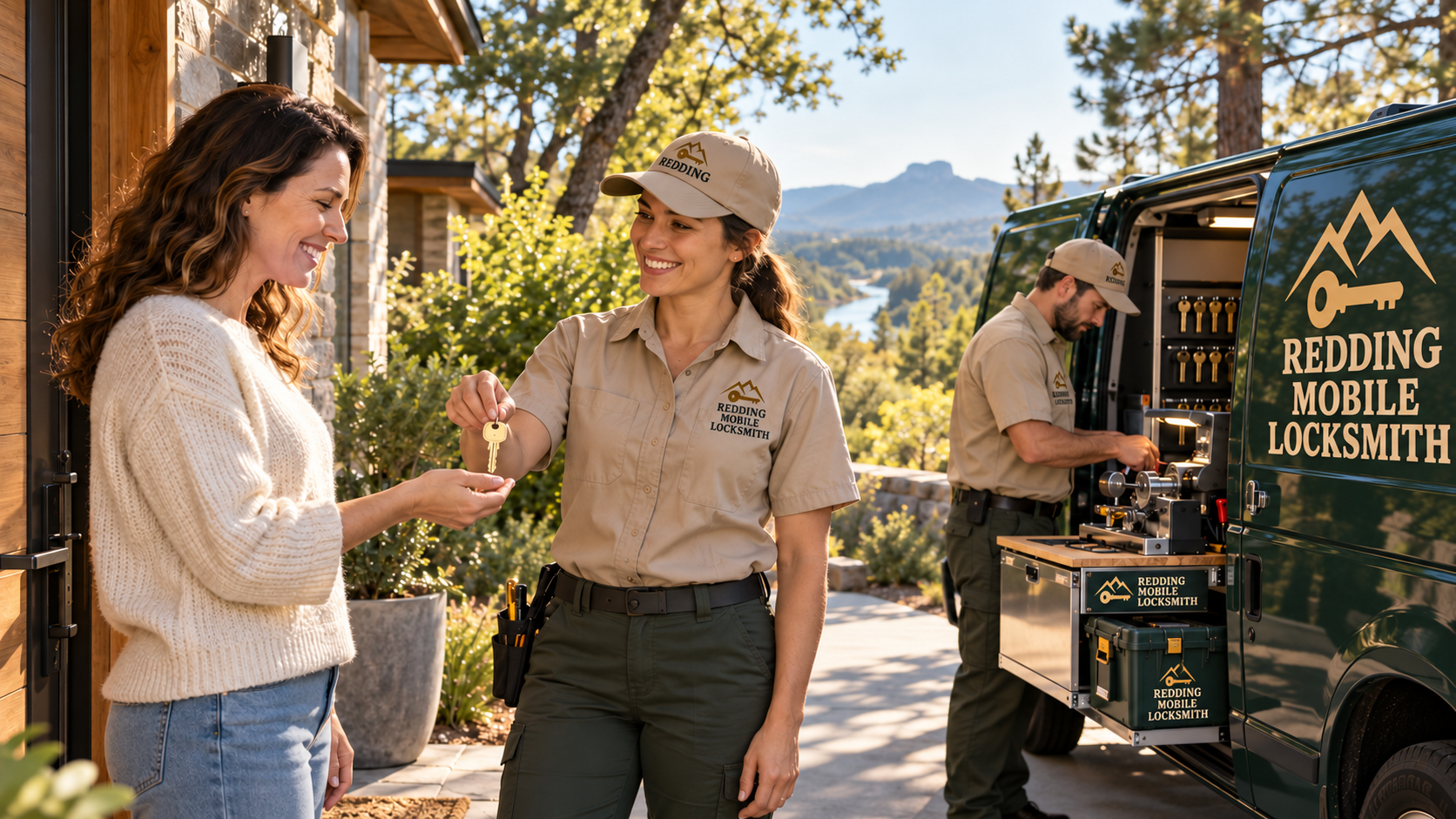
McCloud vehicles
The vehicle at the center of a busy household
In McCloud, a car or truck is not a convenience. The town sits east of Mount Shasta on Highway 89, a forest community where errands often mean a drive, and winter brings snow that turns every trip into a small project. A household relies on its vehicles for work, school, appointments and the pharmacy run, and when one has a key or lock problem, the whole week rearranges itself.
Picture a household with a new baby. Everything happens through the car now: the car seat that has to be buckled just so, the diaper bag that has to be within reach, the feeding schedule that dictates when you must be home. A locked door or a dead fob in that situation is not a nuisance, it is a small crisis, and it often arrives at the least convenient moment.
This page is about the mix of car problems a mobile locksmith handles: getting into a locked vehicle, replacing or duplicating keys, programming fobs, and sorting out ignition trouble. It is written to calm the nerves of a parent and to explain, in plain terms, how each of these works. Redding Mobile Locksmith comes to you in a branded van, which matters when you have a baby and a car that will not cooperate.
The first rule: a child inside is an emergency
Before anything else, one point that cannot be softened. If a baby, a child or a pet is locked inside a vehicle, call emergency services first. Do not wait for a locksmith, do not try to find a spare, and do not weigh the cost of a broken window against anything. A closed car heats up and cools down much more rapidly than most people expect, and emergency responders are trained and equipped for exactly this situation.
Once the child is safe, the locksmith can help with the aftermath, such as repairing a window or lock if one was damaged. Most lockouts are not like this. The key is on the seat, the fob is in a coat pocket, or the baby is buckled in your arms while the car sits locked with the diaper bag inside. Those are frustrating, but not dangerous, and they are the ones this page mostly addresses.
If you are ever unsure which kind of situation you are in, treat it as the more serious one. A phone call to emergency services costs you nothing in pride and may save a great deal of trouble. Our broader page on locked out of your car covers the steps in order.
How a locked car is opened without harm
People imagine a locksmith forcing a door, but modern work is gentler than that. For many vehicles, a technician uses a thin, purpose made tool to create a small gap at the door frame and a long reach tool to press the unlock button or pull the handle from inside. The paint, the weather seal and the window stay intact when this is done carefully.
Some vehicles are more cautious about this than others. Side airbags, wiring in the door and tight door seals mean a technician has to know where not to push. That is why a professional asks for the make and year and why a guess with a coat hanger rarely ends well. The explanation in our guide on how a car is opened without the key stays at the level of general principles, since the details vary by vehicle.
Once the door is open, the technician will usually ask you to confirm you own or are authorized to use the vehicle. Have the registration and a photo ID ready. It might feel like a hurdle in an emergency, but it is what protects every owner from someone trying to open a car that is not theirs. After the vehicle is open, the technician can also help with the key problem that caused the lockout in the first place.
Keys, transponders and why a copy is not always a copy
Most vehicles built in recent decades use a key with a small chip inside the head, called a transponder. When you turn the key, the car sends a low power signal and the chip answers with a code. If the code matches what the car expects, the engine is allowed to start. If it does not, the engine may crank but never fire, or refuse to turn over at all.
This is why a simple cut key from a hardware counter may open the door and still not start the car. The blade fits the lock, but the chip inside is either missing or has not been taught to the car. A mobile locksmith carries equipment that can cut the blade and program the chip so the car recognizes the new key. We go through the concept in what a transponder chip is.
If you have no key at all, that is a different conversation but still solvable in many cases. A technician can often make a key from the vehicle itself, using the lock, the vehicle's information and the car's computer. Our guide on making a key when you have none explains what is involved. Expect the technician to ask for proof of ownership before starting, for the same reason as earlier.
Fobs: the button that quietly stops answering
A key fob is a small radio transmitter. When you press a button, it sends a coded message to the car, and the car locks, unlocks or opens the trunk. Smart fobs go further, letting you start the engine with a button while the fob stays in your pocket. They are convenient until the battery dies or the fob loses its pairing, and then they feel suddenly unreliable.
The first thing to check is the battery. Cold weather shortens battery life and can make a fob behave oddly, a situation McCloud drivers know well. If the fob still has a hidden mechanical key, you can use that to open the door while you sort out the rest. Our piece, my key fob stopped working, now what, walks through the checks in order.
If a new battery does not fix it, the fob may need to be reprogrammed or replaced. That is where a mobile locksmith helps, with equipment that teaches the car a new fob. Our service page on key programming and fobs covers the broader picture, and the page for key programming and fobs in McCloud goes deeper on the local angle.
Ignitions: stuck keys, stiff turns and worn parts
The ignition is a lock too, and like any lock it wears. A key that was cut a little off, a worn key, or years of heavy key rings hanging from it can wear the internal wafers until the key turns stiffly, sticks, or refuses to come out. A steering wheel that locks while parked can make this feel worse, since the wheel binds the lock until you ease the pressure.
If a key will not turn, try wiggling the steering wheel gently while turning the key, which releases the steering lock. Do not force it, because a broken key in an ignition is a much larger problem. If the key will not come out, the car may not be fully in park or the shifter may be slightly off its position. Our guide on a key stuck in the ignition lists safe checks.
When the ignition itself is worn, a technician can sometimes repair or replace the cylinder and match it to your keys. The work needs care, since the ignition is connected to the car's security system. With a baby on board, plan the repair for a time when you do not need the car immediately. A worn ignition rarely fails all at once, and early attention keeps it from stranding you on a cold morning.
Cold, snow and the odd lock failures they cause
Winter in McCloud tests vehicle locks in ways summer never does. Moisture seeps into door locks and freezes, so a key that goes in easily may not turn. Doors can freeze shut at the seal, and a hard pull on the handle can crack a plastic part. Remote fobs can lose range or fail altogether in deep cold.
Some simple habits help. Do not pour hot water over a frozen lock, since it refreezes soon after and can damage paint. Use a lock de icer made for the purpose, or warm the key gently with your hands. Keep a spare key somewhere safe and not in the car. Remember that locks last longer when kept clean and lightly lubricated with the right product.
Snow also affects where you can be reached. If you are stuck along Highway 89 in a storm, tell the dispatcher exactly what you can see around you, and prioritize staying warm. A technician can plan for the conditions, and you can plan for waiting. In a snowstorm with a baby, safety comes ahead of any lock, and emergency services are the right call if warmth or safety is at risk.
Spare keys, shared vehicles and growing households
A household that adds a baby often adds a second set of hands on the vehicles, a grandparent who drives to help, a partner who now shares one car, a sitter with an occasional need. Each person with access is a person who might lose a key. It is smart to decide who holds which key and where the spare lives before a problem begins.
A spare kept at home is far more useful than a spare hidden on the car, which is a gift to anyone who knows where to look. A programmed spare is better than an uncut chip, since you can use it right away. If you have only one key, getting a second made before the first fails is far simpler and calmer than replacing a lost one. The guide on teen drivers and spare keys shows how to think about this as a household grows.
Our page on replacement car keys explains the choices between a plain key, a transponder key and a smart fob. If you are not sure which one your vehicle uses, the technician will find out at the start of the visit. Having the make, model and year ready shortens that step, and in the dark with a fussing baby, every step you can shorten counts.
Trucks, toolboxes and the other locks on a vehicle
A truck in a forest town carries more than people. Toolboxes, bed covers, canopies, a locking fuel cap and a tailgate lock all have keys of their own, and they are easy to forget until one fails. A toolbox key that snaps off in cold weather can strand a day of work as surely as a dead car key, and a locked canopy with the only key inside is its own small puzzle. A mobile locksmith can address these as well.
Many of these locks are simple wafer or pin tumbler designs, and a technician can often cut a replacement key from the lock itself. If the lock is damaged or too worn, it can be replaced and keyed to match your other keys so you carry one fewer key on the ring. Ask about this when you call, since combining keys is one of the small kindnesses a household with a baby will appreciate when every pocket is full.
Glove boxes and center consoles have locks too, usually keyed to the same code as the doors. They are worth remembering if you ever store medication, documents or other items there. A new parent may keep paperwork for the baby in the glove box, and being locked out of it on the way to an appointment is a bother that a spare key avoids. Check that you know which key opens which compartment before you need it.
What to prepare, and who to ask
Preparation takes only a few minutes. Write down the make, model and year of each vehicle, and keep your registration somewhere easy to reach. Know whether your car uses a plain key, a transponder key or a push button start. Note where the spare is, and whether the doors lock automatically. These facts shorten the conversation and help the technician bring the right equipment.
When you are ready to ask for help, use the request form on the contact page. Tell the dispatcher the town, the vehicle, what happened and whether anyone is waiting with you. If a baby is with you and the weather is cold, say so. The phone line is coming soon, so the form is the way in for now, and the team works around the clock.
Redding Mobile Locksmith serves the whole Highway 89 and Interstate 5 corridor, including Mount Shasta and McCloud. The broader cars and trucks page covers the full range of vehicle work. Together these pages should help a busy household feel less at the mercy of a small piece of metal and plastic.
Good to know
Common questions
What should I do if my baby is locked inside the car?
Call emergency services immediately. Do not wait for a locksmith, and do not spend time searching for a spare key. Responders are trained for this. A locksmith can help afterward with any repair, but the first call should always be to emergency services whenever a child or pet is inside a closed vehicle.
Can a mobile locksmith make a key if I lost every key?
In many cases, yes. The technician uses the vehicle's lock and information to cut a key and programs the transponder chip so the car accepts it. You will be asked for registration and photo ID first, since proof of ownership protects every vehicle owner.
Why will my car not start even though the new key turns?
Most newer vehicles need a transponder chip in the key that the car recognizes. A key that is cut correctly but not programmed can turn in the lock and still fail to start the engine. A locksmith with programming equipment can teach the car to accept the key.
My fob stopped working in the cold. Is it broken?
Cold shortens battery life and can make a fob seem dead when it only needs a new battery. Try that first, and use the hidden mechanical key if your fob has one. If a fresh battery does not help, the fob may need reprogramming or replacing.
Will opening my car door damage it?
A careful technician uses specialized tools that avoid scratching paint or harming seals, wiring and airbags. Different vehicles need different methods, which is why the make and year matter. If you worry about damage, ask the technician to explain the approach before starting.
Where should I keep a spare key?
Keep it at home or with someone you trust, not hidden on the vehicle. A spare that is already cut and programmed is the most useful. If you only have one key, consider making a second before the first is lost, since that is usually simpler than replacing everything afterward.