
Home / Etna / New Lock Installation in Etna
Close to Home: Etna
New Lock Installation for Etna Doors
Imagine a caregiver visiting a relative in an older Etna house and noticing the back door latches only if you lean on it. This page covers choosing, fitting and living with new locks.
Close to Home: Etna
The back door that needs a shoulder
Imagine someone visiting an aging relative in a house near the middle of Etna. The kettle is on, the porch light is warm, and then the caregiver notices something small: the back door only latches if you lean on it just right. The knob is loose, the deadbolt is missing, and the key for the front door is one of three nobody can identify. It is the kind of detail you notice only when you are paying attention, and once you notice it, you cannot quite stop. A caregiver tends to see the whole house as a series of small risks and small comforts, and a door that fights back belongs in both columns.
This page is for that observation, and for anyone who has looked at a door and wondered whether it deserves better. New lock installation is not only about security. It is about doors that close properly, keys that make sense and hardware that suits the people who use it. A good installation makes a house feel more settled without anyone being able to say exactly why.
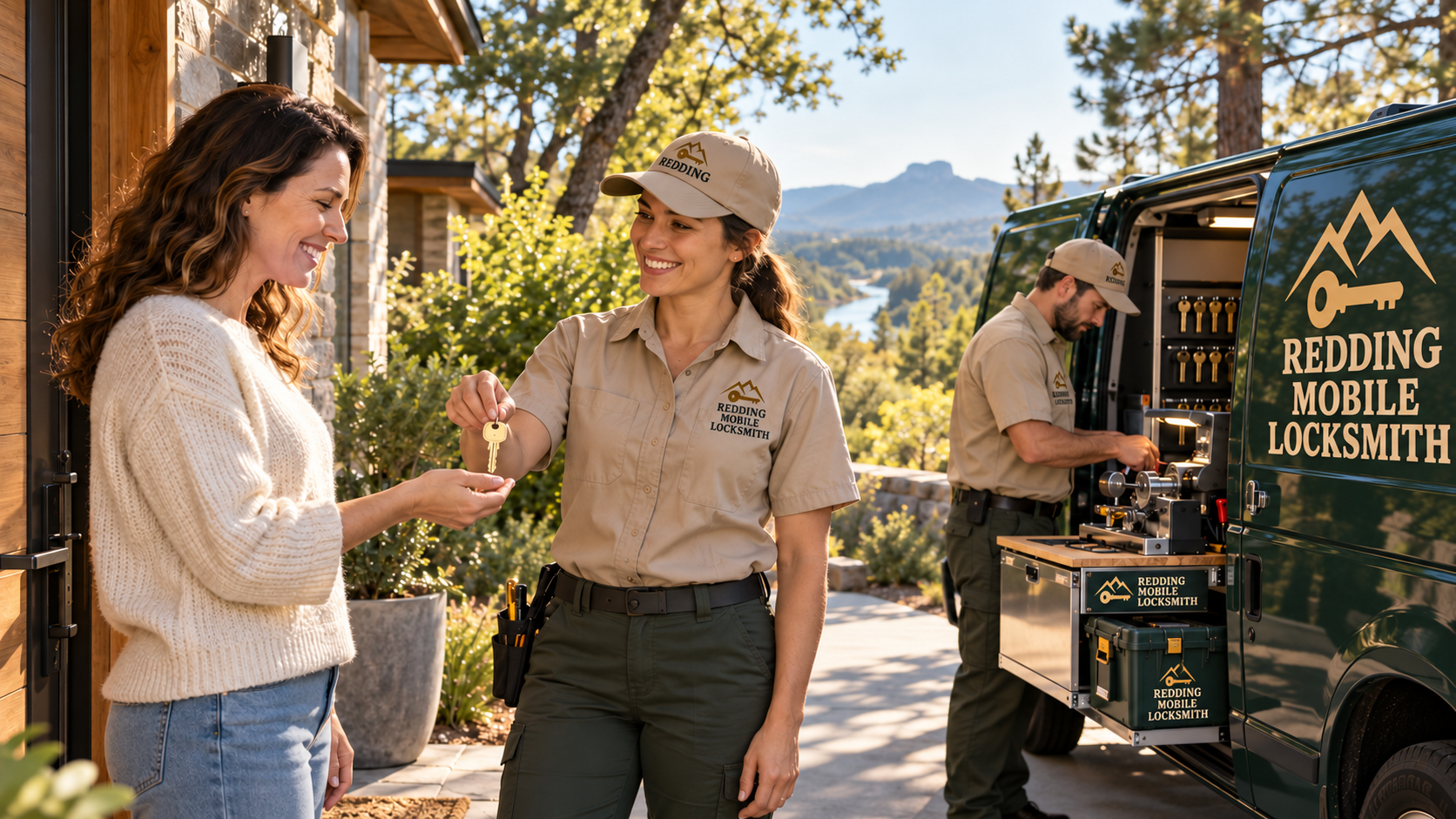
Redding Mobile Locksmith brings a branded team in uniforms and a branded service van to Etna and the rest of the Scott Valley. Our van carries professional tools, key cutting equipment and common hardware, so many installations can be finished at the door instead of requiring a second trip.
Why people install new locks
The reasons vary more than you might expect. Some people are moving into a home and want a fresh start. Others have a lock that has simply worn out after years of use. A few are adding a deadbolt to a door that never had one, or upgrading from a knob that rattles to a lever handle that is easier on stiff hands.
Etna has a mix of old and new buildings, and each has its own story. A downtown storefront may need hardware that suits a heavily used door, while a ranch house may need a handful of matching locks across several outbuildings. A caregiver might want a lock that is easy to operate for someone with limited grip strength. The right choice follows the use. A lock chosen for how a door is really used will last longer and annoy fewer people than one chosen because it was on a shelf or looked impressive in a catalog.
There is also the matter of simply wanting to know who has keys. A new installation comes with fresh keys, and that resets the list. Our guide on rekeying after buying a house covers the closely related question of when a reset is wise.
Looking at the door before the lock
A new lock is only as good as the door it goes into. Before choosing hardware, we look at the door itself. Is it solid wood, hollow, metal or fiberglass? How thick is it? Is the frame square, and does the door close without rubbing? A lock cannot fix a sagging door, and a door that is out of line will make even new hardware feel poor. We have seen, in the general run of this work, that a few minutes spent squaring up a door can matter more than the price tag on the lock.
Doors in older buildings often show their age. Hinges loosen, wood swells and shrinks, and years of paint can make a door thicker or thinner than the original. We measure the prepared holes, the backset and the thickness, because these dimensions decide which hardware will fit without cutting or patching. Our note on how locks fit different door materials goes into this.
If the door has problems that a new lock will not cure, we say so. Sometimes the right first step is tightening hinges or adjusting the frame. Our guide about why doors sag explains the pattern, and it saves you from paying for hardware that will struggle in a crooked opening.
Choosing the type of lock
There are a few main families. A knob or lever set holds the door closed with an angled latch and often includes a keyed cylinder. A deadbolt adds a solid steel bolt that does the heavy lifting. Combination sets pair the two, and some doors use a single mortise lock that contains both functions inside a pocket cut into the door edge.
Beyond the basic types are options such as keypad locks, smart locks and electronic hardware. Those can be handy for someone who forgets keys or for a household with many visitors. They also bring batteries, software and a different kind of maintenance. Our guides on smart locks and whether they can be rekeyed help you decide.
The honest approach is to start with how the door is used. A back door that sees daily traffic needs durable hardware that is comfortable to operate. A rarely used side door may need a solid deadbolt more than a fancy handle. We talk through the options with you rather than reaching for the most elaborate item in the van.
Understanding lock grades without the jargon
Lock hardware is sorted into grades that describe how much wear and force it is built to tolerate. A higher grade usually means heavier internal parts and a longer working life, while a lower grade suits light duty. You do not need to memorize the grades, but it helps to know that two locks that look alike can be built very differently inside.
For an exterior door that is used every day, a sturdier grade is usually worth considering. For a closet or an interior bedroom, a lighter lock may be perfectly sensible. The point is to match the hardware to the job instead of assuming that more is always better or less is always enough.
If you want the longer explanation, our guide on what lock grade means unpacks it, and the note on whether expensive locks make a difference offers a level headed view. We will not push you toward more hardware than the door needs.
How we install a lock at your door
A typical visit begins with a look at the door and a conversation about what you want. We confirm the hardware, check that the prepared holes match and test the door's alignment. If a hole needs adjusting, we do it carefully with proper tools. The goal is a clean fit where the lock sits snugly in the door and the bolt lines up with the strike.
Next comes mounting. The cylinder, the latch and the trim are secured, and the strike plate is set into the frame, ideally with longer screws that reach the solid wood behind the trim. This small detail matters. A good lock held by short screws in thin trim is only as strong as that trim, and the difference often shows up the hard way. Many forced entries and many bent latches trace back to screws that barely bit into anything. It is the least visible part of the job, and it is one we are careful about.
Finally we test everything. We turn the key from outside, operate the thumb turn from inside, and close the door several times to see that the bolt throws smoothly. Then we hand you the keys and explain how they work. If you have a relative who will use the lock daily, we like to have them try it while we are still there, so any awkwardness shows up while we can adjust it. If the lock has options such as handing or reversing, we make sure it suits the door.
Matching locks for a household
Many homes end up with a different key for each door, which is both tiring and unnecessary. When we install several locks, we can often arrange them to use the same key, so one key opens the front, back and side doors. For a caregiver or a family who visit often, fewer keys means fewer mix ups.
On the other hand, some doors deserve their own key. A workshop, a storage building or a rental unit might need separate access. We can set this up by planning which doors share and which do not. Our guide on how many keys a household should keep offers a sensible framework.
Think about spare keys too. Put one with a trusted person and keep one for yourself. Avoid hiding a key outside, where it is easy to find. If a relative needs access, a keypad option can be a gentler solution than handing out metal keys. We can talk through those choices while we are at the door.
Safety and comfort for older relatives
When installing locks for an older relative, the question is not only how strong the lock is but how easy it is to use. A thumb turn that requires a firm pinch, a key that is hard to see or a heavy knob can all be small obstacles. A lever handle and a larger thumb turn can make a real difference. Our guide on lock choices for an older relative living alone explores this.
There is also the matter of who may need to enter in an emergency. Family members, a caregiver or a neighbor might need access. We can discuss options such as a spare key held by someone trusted or a keypad that allows temporary codes. The aim is a plan that everyone understands, written down somewhere simple, so that a worried phone call at night does not turn into a scramble for the right key. We do not give medical advice, but we can help make the doors work for the person who lives behind them.
Please remember that exits matter too. Any lock should allow easy exit from the inside without a key in an emergency, unless a specific situation calls for something else. Rules vary by property type and location, so ask your landlord, property manager or local authority if you are unsure about what is allowed.
Installing around Etna weather
Etna winters are cold, and doors take a beating from frost, snow melt and swelling wood. A new lock should be installed with that in mind. Hardware with a good finish resists moisture, and a snug fit with room for seasonal movement keeps the bolt from binding. We choose and fit with the climate in view. Where a door faces the weather, we think about drainage, shade and how the wood will behave through the year, because a lock that fights the door every winter will wear out long before its time.
After the installation, simple care helps. Use the right lubricant, avoid forcing a stiff key and keep ice away from the keyway. Our note on what lubricant belongs in a lock and the guide on weather and locks are easy to follow.
Summer heat and dry air can also shrink or warp doors, so a lock that works in July may feel different in February. That is not a flaw in the lock. It is the door breathing. A good installation allows for it, and a follow up adjustment is straightforward if the door moves more than expected.
Business doors and outbuildings
Not every installation is for a house. Etna has small shops, offices and workshops that need sturdy locks for front doors, back doors and storerooms. Those doors see heavy traffic, so hardware must be durable and easy to operate. For larger commercial needs such as closers and panic hardware, our door hardware for business in Etna page goes deeper.
Ranch properties often include sheds, barns and gates. A padlock may be the right answer for some of these, while others benefit from a proper deadbolt. Our guides on shed and garage padlocks and gate locks for country driveways are good places to begin.
If you are not sure which category your door falls into, ask. We would rather explain than guess, and we will happily tell you when a simple adjustment will do the job better than new hardware. Not every stubborn door needs a replacement. A short description of the door, its use and its location is enough for us to suggest a path, and we can refine it when we see the opening in person.
Getting started with us
To arrange an installation, tell us which doors you have in mind, what they are made of and what you want from the new lock. Photos of the door edge, the strike and the existing hardware can help. We discuss options and the plan before beginning, and we do not publish prices on these pages. Sorting out the details first means you decide with all the information and nobody feels hurried at the door.
Because our phone line is marked coming soon, please use the request form on our contact page. We serve Etna around the clock, though planned installations are usually easier to schedule when the door is not locked and the lights are on. For emergencies, see our emergency help any hour in Etna page.
For the service overview, visit new lock installation. For nearby context, explore the Etna page. And if the problem is a lock that is old but fixable, our lock repair and adjustment service may be the better first step.
Good to know
Common questions
Can you install a deadbolt on a door that never had one?
Often yes, provided the door is thick enough and sturdy enough to take the hardware. A technician measures the door, drills the proper holes and sets the strike into the frame with screws long enough to reach solid wood. Very thin or damaged doors may need a different plan.
Will new locks match the keys I already carry?
They can. When installing several locks, we can arrange them so one key opens multiple doors, or we can keep doors on separate keys if you prefer. Tell us how many keys you want to carry and who needs access to which door.
How do I know which grade of lock my door needs?
Think about how often the door is used and how important it is. A daily exterior door benefits from sturdier hardware, while a rarely used interior door can have a lighter lock. A technician will explain the options without steering you toward more than the door actually needs.
Can older doors in Etna take modern locks?
Many can. Technicians check the thickness, existing holes and condition of the wood or metal. Some older doors need small adjustments to accept new hardware, and a few are better served by keeping a mortise lock and updating its internals. We explain the choices after seeing the door.
What if my relative has trouble using keys?
Ask about lever handles, larger thumb turns or keypad options that reduce the need to handle small keys. We can discuss what suits the person using the door and arrange spare access for trusted family or caregivers. We do not provide medical advice, only practical lock options.
Do I need permission before changing locks?
Rules vary. If you own the home, the choice is usually yours, though associations and local requirements can differ. If you rent, check with your landlord. Commercial spaces may have lease terms or building requirements. Ask the relevant party if you are unsure, and we can work within their guidance.